
Waking up with a pounding head, patchy memory, nausea, and the uneasy sense that something isn't adding up can be frightening. Many people describe the same thought first: this feels worse than a normal hangover. That concern matters. When someone suspects drink spiking or drug-facilitated assault, the next morning is still an important window for medical care, safety planning, and evidence preservation.
The term “roofie” is often used loosely, but it doesn't refer to only one drug. It grew out of public awareness of Rohypnol, and now people use it more broadly for substances used to sedate, confuse, or impair someone without consent. The effects can overlap with alcohol, sleep deprivation, dehydration, or other substances, which is part of why the situation can feel so confusing.
What matters first is simple. If symptoms feel out of proportion to what was consumed, if there are memory gaps, or if there is any concern about assault or injury, it's worth acting on that concern now instead of waiting for certainty.
Waking Up Confused What You Need to Know First
The morning after a suspected drugging often feels disorienting in two ways at once. The body may feel heavy, slow, shaky, or sick. The mind may feel foggy, ashamed, panicked, or blank.
That combination can make people second-guess themselves. They may wonder whether they're overreacting, whether it was “just alcohol,” or whether it's too late to do anything useful. It isn't too late to seek help.
What “roofie” usually means
In everyday use, “roofie” often means a substance slipped into a drink to impair awareness, judgment, coordination, or memory. Some of these substances are sedatives. Some can intensify alcohol's effects. Some may leave a person awake enough to move or speak but unable to think clearly or remember what happened afterward.
A simple way to understand it is this. The concern isn't only what substance might have been used. The concern is non-consensual impairment.
For readers who want background on one major class of sedating drugs, this overview of benzodiazepines and how they affect the brain and body can help explain why symptoms like slowed thinking, fatigue, and memory problems may linger into the next day.
First priority: Safety comes before certainty. A person does not need proof of what happened before getting medical help.
What needs attention right now
A next-day concern about drink spiking usually calls for three questions:
- Physical safety: Is there trouble breathing, standing, walking, or staying awake?
- Medical follow-up: Is there a need for urgent evaluation, toxicology collection, injury assessment, or sexual assault care?
- Evidence preservation: Has anything happened since waking up that could reduce what clinicians or forensic staff can collect?
If the answer to any of those feels unclear, it still makes sense to reach out for help. Confusion is common in these situations. Clear recall is not required before seeking care.
Common Roofie Symptoms the Next Day
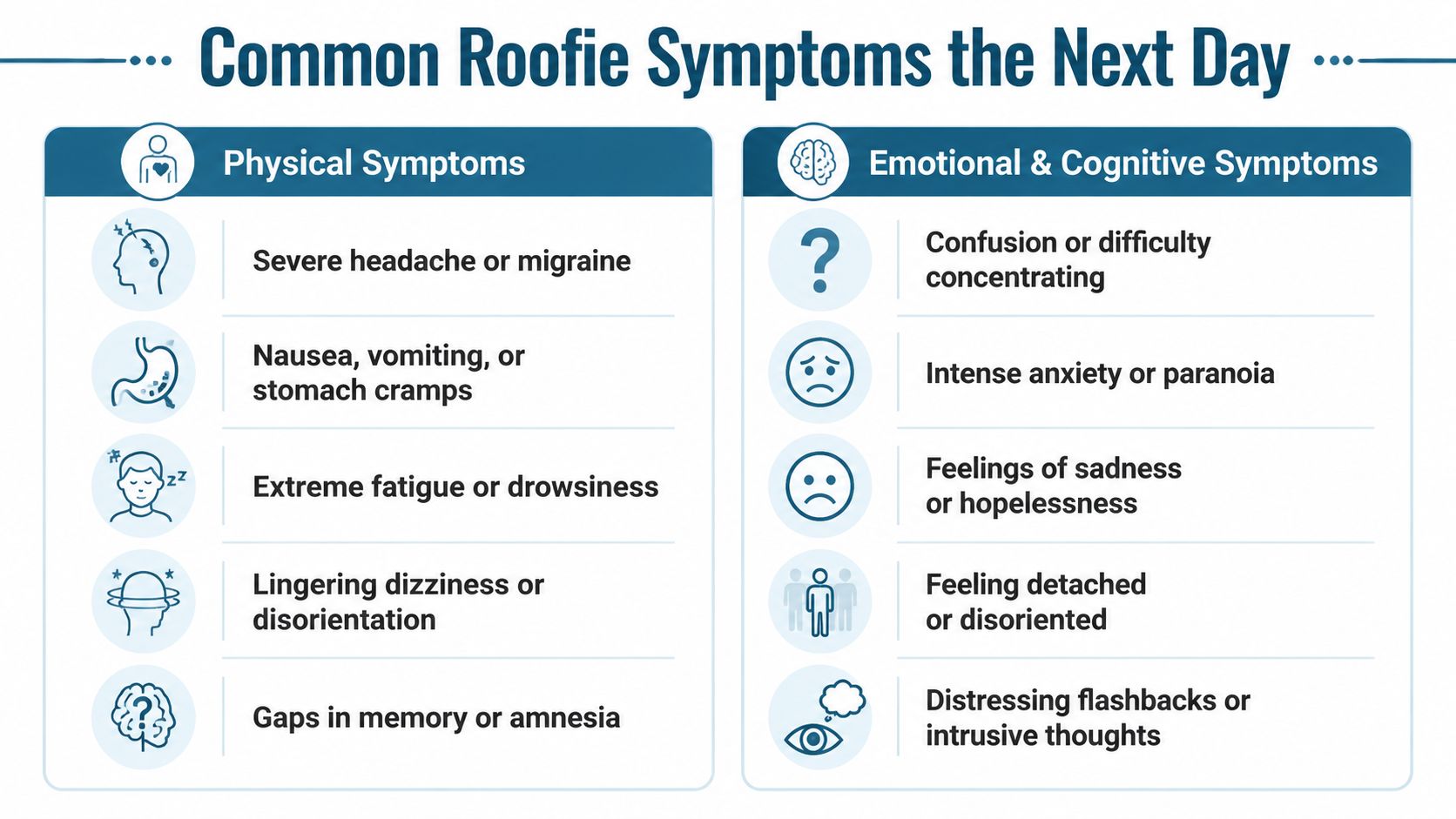
The most common roofie symptoms next day fit a pattern of lingering central nervous system depression. Common findings include profound fatigue or somnolence, confusion or brain fog, memory gaps, headache, and nausea, with the most useful clue being disproportionate intoxication, meaning the person feels far more impaired than expected from the amount of alcohol consumed, as described by Sandstone Care's summary of roofie symptoms.
Physical symptoms
The body often gives the earliest clues that something is off.
- Extreme drowsiness: Not just tired, but unusually heavy, sedated, or unable to fully wake up.
- Headache: This may feel more intense than an ordinary hangover headache.
- Nausea or vomiting: Some people wake up queasy, actively vomiting, or unable to tolerate food.
- Dizziness: Standing, walking, or even sitting upright may feel unstable.
- Poor coordination: Hands may feel clumsy, legs weak, and balance unreliable.
- Slowed speech or breathing: This is a more serious sign and should not be dismissed.
Cognitive and memory symptoms
Memory problems are often what make people suspect something beyond alcohol.
- Blank spots: Missing chunks of time, not just fuzzy details.
- Brain fog: Difficulty following a conversation, making decisions, or processing what happened.
- Disorientation: Not remembering how the person got home, where belongings went, or who was present.
- Confusion: A sense that the mind is moving slowly or not connecting events correctly.
A typical hangover can make someone feel miserable. It usually doesn't create a strong sense that the level of impairment makes no sense for what was consumed.
Emotional effects that show up fast
The emotional reaction the next day can be intense, even before the facts are clear.
- Fear: Worry that something happened during the memory gap
- Shame: Self-blame, embarrassment, or hesitation to ask for help
- Anxiety: Racing thoughts, panic, or dread when trying to remember the night
- Detachment: Feeling unreal, numb, or disconnected from the body
A quick comparison
| Experience | More consistent with a hangover | More concerning for drink spiking |
|---|---|---|
| Impairment level | Feels bad, but roughly matches drinking | Feels far worse than expected |
| Memory | Patchy details | Clear gaps or blackout periods |
| Coordination | Sluggish | Unusually unsteady or weak |
| Mental clarity | Tired and irritable | Foggy, confused, or disoriented |
| Concern level | Feels unpleasant | Feels wrong |
When symptoms don't line up with the amount consumed, that mismatch deserves attention.
Why Detection Is Difficult and Time Is Critical
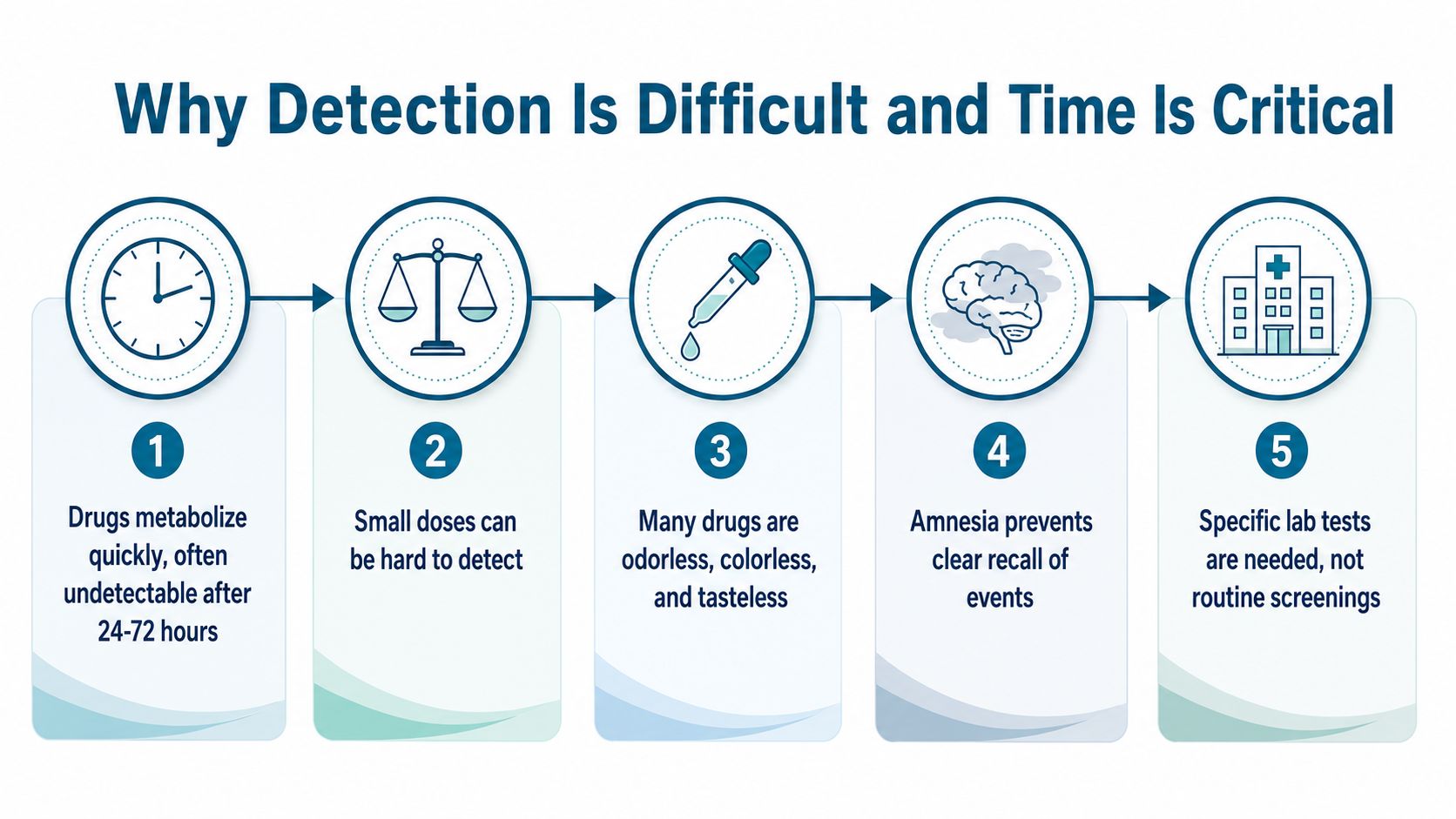
One of the hardest parts of this experience is not knowing whether testing will give a clear answer. Many people expect a simple yes-or-no result. In practice, detection is often much messier.
Why uncertainty is common
Several factors change what the next day looks like:
- The substance itself: Different drugs affect memory, sedation, coordination, and nausea differently.
- Alcohol use: Alcohol can intensify sedation and make the overall picture harder to interpret.
- Dose and timing: A small amount taken late in the night may leave fewer clues by morning.
- Body differences: Metabolism, food intake, other medications, and general health all matter.
Someone can still feel convinced that something is wrong and yet never receive a definitive lab confirmation. That does happen.
A review of suspected drink spiking cases in a Melbourne emergency department found that among 97 people who presented after suspected drink spiking, only 17% had a drug detected, while alcohol was present in 42% of cases, according to the 2007 emergency-department study on suspected drink spiking. That finding matters because routine toxicology can miss short-lived substances, especially when testing is delayed.
What this means for next-day decisions
The practical lesson is not “wait and see.” It's the opposite. A person doesn't need certainty before taking action.
Symptoms improving by morning do not mean the concern was minor, and a negative routine screen would not automatically rule out a short-lived drug.
For readers trying to understand why sedative drugs can create memory loss, confusion, and impaired judgment, this background on benzodiazepine misuse and related effects may help explain the pattern.
The most useful standard is this. If something feels wrong, especially with memory loss or disproportionate impairment, seek care based on the suspicion itself.
Your Immediate Action Plan for the Next Day
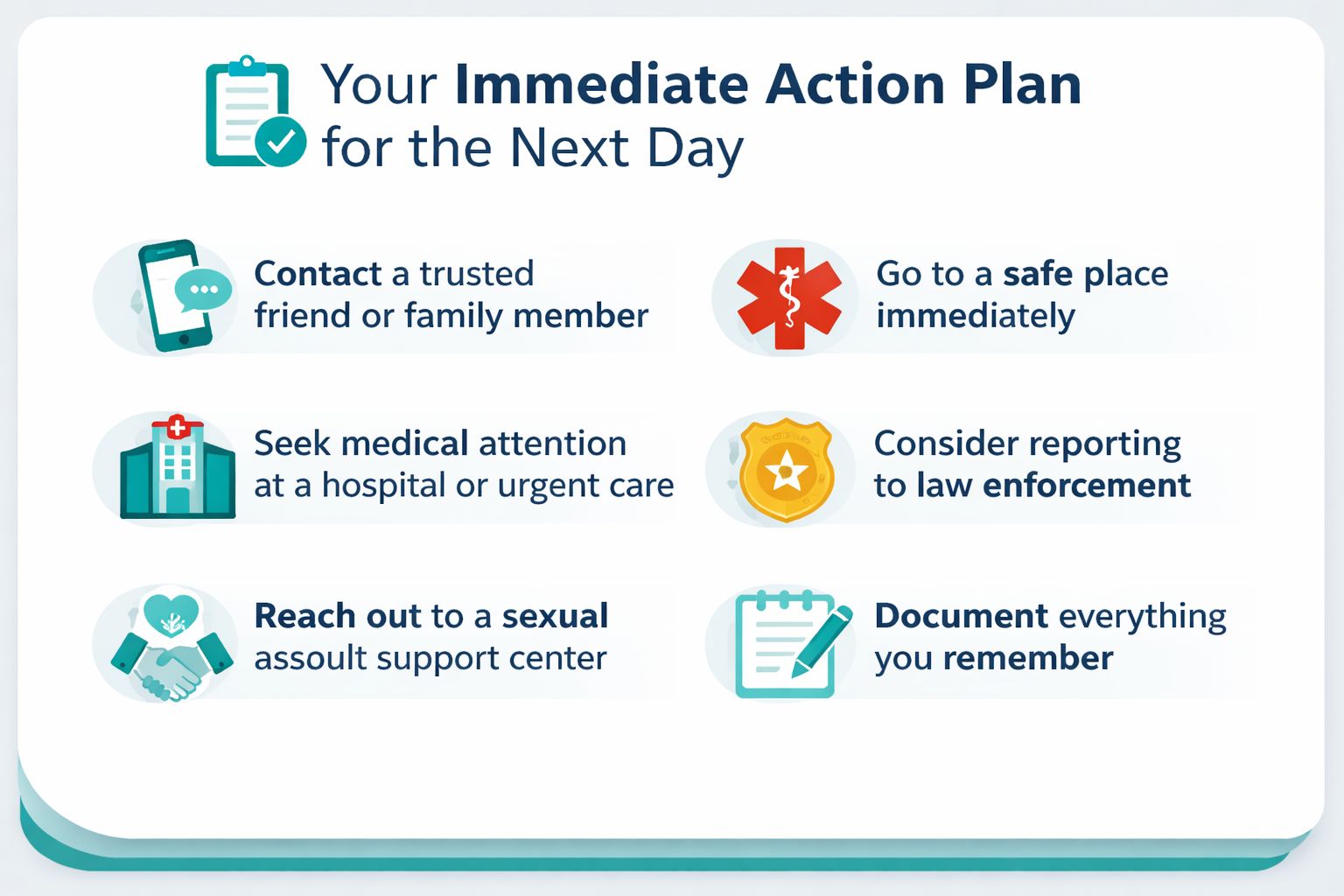
When someone wakes up worried they may have been drugged, it helps to reduce the situation to a short checklist. Stress and brain fog make complex decisions harder. A simple plan is safer.
Start with safety
Get around trusted people.
Call or text a friend, family member, neighbor, or other trusted person. If possible, don't stay alone while still confused, weak, or unsteady.Don't drive yourself.
If there is lingering sedation, dizziness, or poor coordination, arrange a ride or call emergency services.Go somewhere secure.
If the current location doesn't feel safe, leave it with support.
Protect possible evidence
This part is emotionally difficult, especially when someone's first instinct is to shower, brush teeth, change clothes, or clean up. If there is any concern about assault or the need for forensic evidence, it helps to pause before doing those things.
According to Cleveland Clinic guidance on symptoms of being roofied and next steps, experts advise against showering, changing clothes, or cleaning up before seeking medical help. Medical evaluation is also important for discussing emergency contraception, STI testing, and post-exposure prophylaxis.
If possible:
- Don't shower yet
- Don't change clothes
- Don't wash bedding
- Don't throw away cups, bottles, or receipts
- Place clothing or other items in a clean paper bag if they've already been removed
- Write down what is remembered while details are fresh
Seek medical care even if symptoms are fading
A lot of people hesitate because they're more awake by late morning. That's understandable, but it can lead to missed care.
Medical evaluation can help with:
- Monitoring sedation or breathing problems
- Checking for dehydration, injury, or overdose risk
- Collecting blood or urine when appropriate
- Addressing possible assault-related concerns
- Planning follow-up care
If walking safely, breathing normally, or staying awake is a struggle, emergency care is the right choice.
Bring a short summary
If the mind feels scattered, a brief note can help at the hospital or urgent care:
- Where the person was
- What was consumed, if known
- When symptoms began
- What is missing from memory
- Any physical pain, bleeding, bruising, or genital symptoms
- Names of people who may have seen what happened
The goal is not to produce a perfect story. The goal is to give clinicians enough to respond quickly and carefully.
Understanding Medical and Forensic Testing
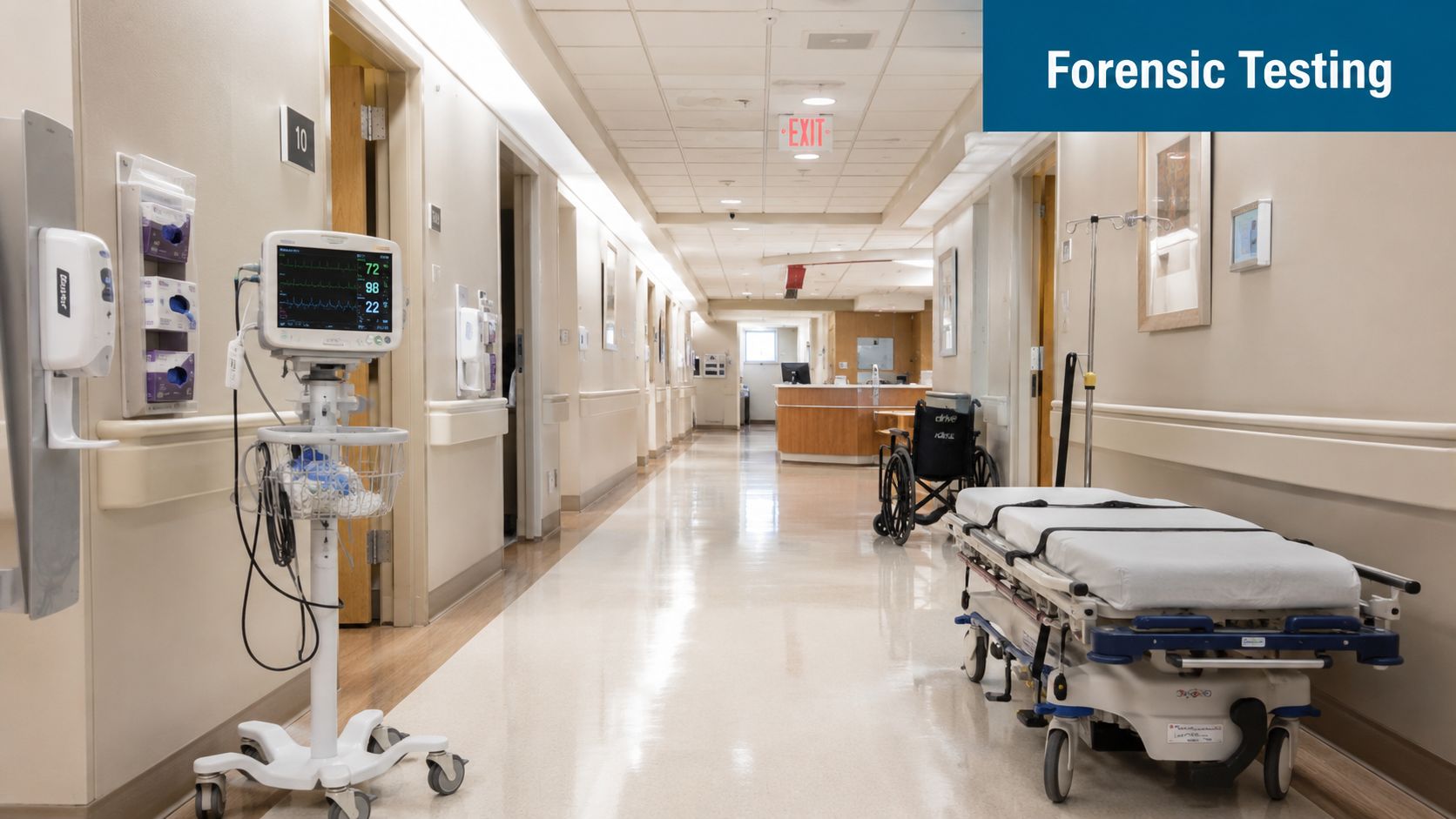
Hospital care after suspected drink spiking can feel intimidating, especially when memory is unclear. Knowing what may happen can reduce some of that stress.
What clinicians may do
Depending on symptoms and concerns, a hospital or emergency department may:
- Check vital signs and level of alertness
- Assess for injuries
- Collect urine or blood samples
- Discuss a sexual assault forensic exam when relevant
- Offer treatment for nausea, dehydration, or other urgent issues
- Review options without forcing a police report
If a forensic exam is offered, the person can usually ask questions before deciding. Consent matters throughout the process.
Why the term “roofie” can be misleading
Rohypnol, or flunitrazepam, became widely known as a drink-spiking drug in the 1990s, with next-day symptoms including confusion, blackouts, and severe drowsiness, and the term now often covers a broader category of substances such as GHB and ketamine, as explained in GoodRx's overview of roofie symptoms and history.
That broader meaning matters because testing isn't always looking for one single drug. Different substances require different detection methods, and routine screening may not capture everything. Readers who want a plain-language overview of how labs interpret samples in legal and medical settings may find the science of forensic toxicology helpful.
What a negative result does and doesn't mean
A negative test result can be emotionally upsetting. Some people hear “nothing found” and conclude they imagined it. That isn't a fair conclusion.
A negative result may reflect:
- A delay in sample collection
- A substance not included on a routine panel
- A low concentration
- Normal limits of testing
A lab result is one piece of information. It does not define whether the person's symptoms, fear, or lived experience were real.
How Zoe Behavioral Health Supports Your Recovery
The morning after can feel disorienting in a different way. The medical questions may still matter, but many people are also dealing with fear, shame, gaps in memory, poor sleep, and the stress of not knowing exactly what happened. That combination can shake a person's sense of safety for days or weeks.

Recovery often needs support on two fronts at once. A person may be trying to process a possible assault or drugging while also noticing risky coping, such as drinking more, misusing medication, isolating, or missing work because they cannot settle down enough to function.
Zoe Behavioral Health provides outpatient drug, alcohol, and mental health treatment in Lake Forest, Orange County, including care for people dealing with trauma symptoms and substance use at the same time. Depending on the situation, that can include PHP, IOP, outpatient counseling, and care coordination.
What ongoing support may need to address
Good care usually starts with a practical question: what is getting in the way of safety and day-to-day functioning right now?
That may include:
- Trauma symptoms: panic, intrusive thoughts, avoidance, hypervigilance, nightmares
- Substance concerns: increased drinking afterward, relapse risk, or using pills to sleep or calm down
- Functional problems: trouble concentrating, missed work, social withdrawal, disrupted routines
- Family strain: not knowing how to explain what happened, or fearing that others will minimize it
In practice, the trade-off is simple. Waiting to see if it all settles down can feel easier in the short term, but symptoms often get more entrenched when a person is trying to manage fear, sleep loss, and substance use alone.
What tends to help, and what usually makes recovery harder
Approaches that tend to help include:
- Trauma-informed therapy: care that does not pressure someone to tell the full story before they are ready
- Dual-diagnosis treatment: support for trauma reactions and substance use in the same plan
- Routine restoration: consistent sleep, meals, movement, and daily structure
- Practical care coordination: help with appointments, family communication, and treatment planning
What commonly makes recovery harder:
- Self-blame
- Trying to push through in isolation
- Using alcohol or sedatives to force sleep or numb panic
- Waiting until anxiety, depression, or relapse risk becomes severe
For loved ones who want to respond in a steady, useful way, these practical tips for PTSD support can help with listening, avoiding harmful reactions, and showing up consistently.
People who are unsure about treatment access, level of care, or admissions steps may also benefit from this guide on how to find help with substance abuse admissions.
Frequently Asked Questions About Next-Day Symptoms
| Question | Answer |
|---|---|
| Can roofie symptoms the next day feel exactly like a hangover? | They can overlap, which is why people often second-guess themselves. The concern becomes stronger when the impairment feels disproportionate, memory is missing, or coordination and confusion seem unusually severe. |
| Is it still worth going to the hospital the next day? | Yes. Even if some symptoms have improved, medical care can still address safety, injury, sexual health concerns, and possible evidence collection. |
| What if the person already showered or changed clothes? | It still makes sense to seek care. Evidence preservation may be affected, but medical support and documentation can still matter. |
| Does a negative drug test mean nothing happened? | No. Testing has limits, especially when collection is delayed or the substance is short-lived. |
| Should the person report to police immediately? | That decision is personal. Medical care can happen whether or not a report is made right away. |
| What if the strongest symptoms now are anxiety, shame, or panic? | Those reactions are common after a frightening loss of control or memory. Mental health support is appropriate even when the facts are incomplete. |
If this situation has left someone scared, confused, or struggling after the immediate crisis, Zoe Behavioral Health offers confidential guidance for outpatient mental health and substance use care in Orange County. A compassionate admissions team can help determine whether trauma support, dual-diagnosis treatment, or a higher level of care is the right next step.
