
If addiction has started to shape every morning, every phone call, and every plan in Orange County, the next step can feel unclear. Families often know help is needed, but they're stuck between fear of withdrawal, worry about relapse, and the exhaustion of trying to manage everything at once. A medication assisted treatment program can turn that chaos into a structured plan, with medical support, therapy, and steady follow-up that gives recovery room to take hold.
MAT is not a shortcut. It's a whole-patient approach that combines FDA-approved medications with counseling and behavioral therapies, which is why it's used as a sustained-care model rather than a quick fix CDC guidance on MAT. For people in Orange County looking for outpatient care that fits real life, that distinction matters. Recovery has to work on weekdays, not just on paper, and the right program makes that possible.
Finding Hope in Recovery Through MAT
A parent may be watching someone they love cycle through promises, withdrawal, and another emergency room visit. A spouse may be covering for missed work, missed bills, and missed meals while trying to hold the family together. That kind of uncertainty wears people down, and it often leaves them wondering whether anything will help.
A medication assisted treatment program offers a different path. Medication helps steady the body and reduce cravings, while therapy helps rebuild routines, relationships, and coping skills. SAMHSA describes MAT as a whole-patient approach, and that wording fits because recovery touches more than one part of life.
Why hope feels realistic here
Hope is not vague optimism. In MAT, hope comes from structure, predictable care, and the chance to stay engaged long enough for change to stick. The CDC notes that treatment can last from months to years and warns that tapering too quickly can raise relapse and overdose risk, which is one reason MAT is treated as ongoing care rather than a one-time event CDC guidance on MAT.
That steady care changes daily life in practical ways. People can start showing up more consistently at home, at work, and in therapy, and the family no longer has to guess what the next crisis will be. If you want a closer look at how MAT works and who it may help, this overview of what MAT means in treatment can make the idea easier to understand.
Zoe Behavioral Health in Lake Forest serves Orange County adults with outpatient care that includes MAT, and its admissions support helps families move from uncertainty to a clear next step Zoe Behavioral Health programs.
What Is a Medication Assisted Treatment Program
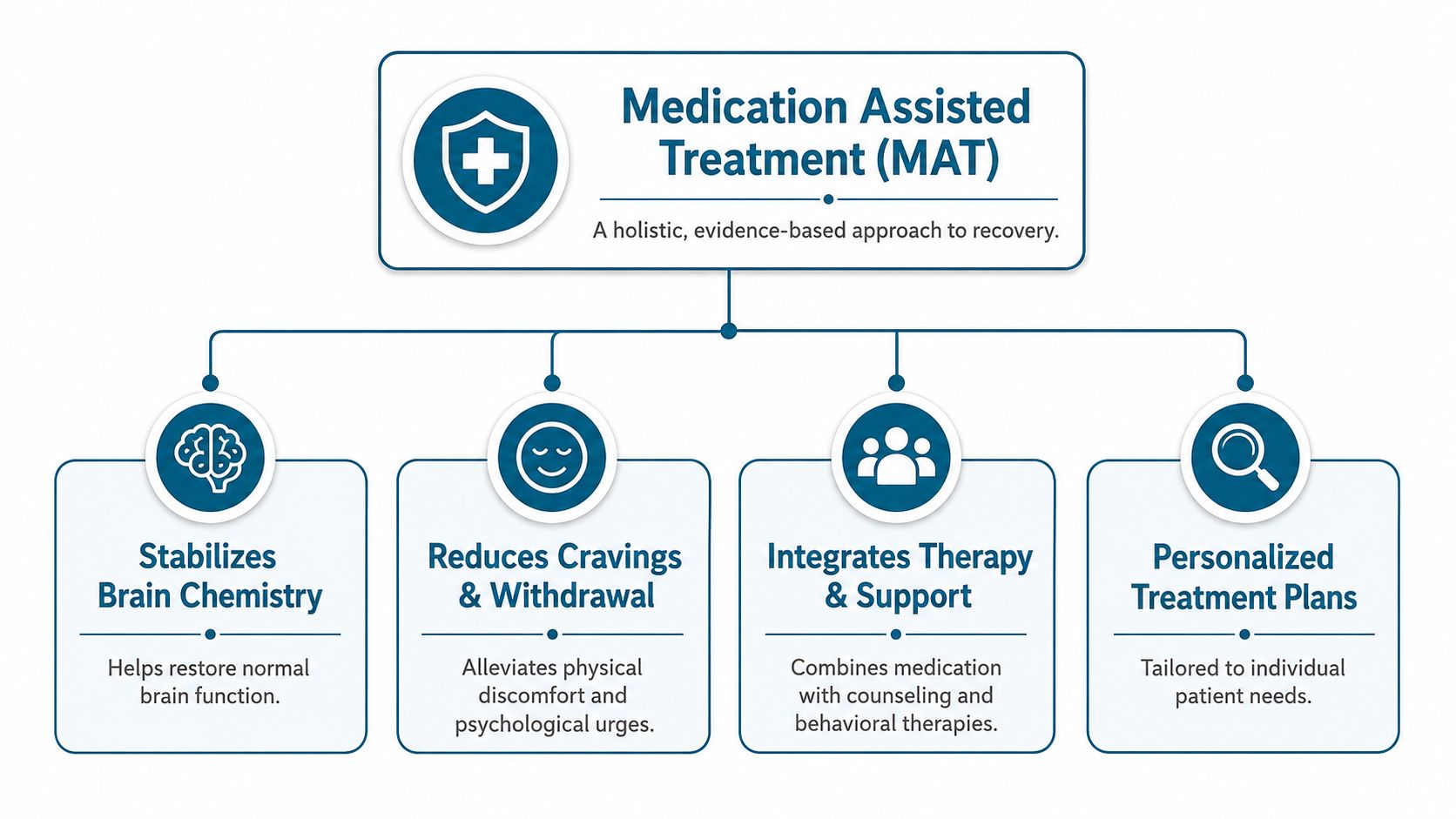
A medication assisted treatment program is a way of treating substance use disorders, especially opioid use disorder, that combines medication, counseling, and behavioral therapies. It uses medicines such as buprenorphine, methadone, and naltrexone along with therapy so the person can work on recovery with more stability and less physical distress. The point is to create enough steadiness for the deeper work of recovery to begin.
For many families, the easiest way to understand MAT is to compare it with other kinds of ongoing medical care. Someone with diabetes does not stop treatment because medicine is part of the plan. The medication helps protect health, while education, monitoring, and daily habits support long-term stability. MAT works in a similar way. The medication helps normalize brain chemistry, reduce cravings, and ease withdrawal so counseling can be useful.
Practical rule: If withdrawal is so severe that someone cannot focus on counseling, medication often becomes the bridge that makes treatment possible.
How MAT changes the recovery experience
The change is often gradual, and that is part of why it can be hard to recognize at first. Sleep may improve a little. Cravings may feel less overwhelming. A person may be able to sit through a session without feeling as if every thought is being pulled off course by withdrawal.
That steadier day-to-day experience matters because MAT is meant to support treatment, not stand alone. The AHRQ technical brief describes medication as central while still paired with counseling and other clinically appropriate services AHRQ technical brief. The main idea is simple, medication is the foundation that helps therapy do its work.
For readers who want a plain-language explanation before taking the next step, a guide to what MAT means can help make the process feel less unfamiliar.
In an outpatient MAT setting in Orange County, that experience often looks like showing up for care while continuing to live at home, work, and stay connected to family. The structure is there, but it does not ask the person to put life on hold. For many families, that balance is what makes treatment feel possible instead of overwhelming. Zoe Behavioral Health in Lake Forest offers outpatient care that includes MAT, and its admissions support helps families move from uncertainty toward a clear next step.
Understanding the Medications Used in MAT
A family often asks what the medication part of MAT looks like once treatment begins. The answer depends on the person, because buprenorphine, methadone, and naltrexone serve different needs and fit different routines CDC guidance on MAT. They are grouped together because they are all used in medication assisted treatment, yet they are not used the same way in day-to-day care.
| Comparing Common MAT Medications | How It Works | Best For | Administration |
|---|---|---|---|
| Buprenorphine | Helps reduce withdrawal and cravings while supporting steady function | People who need outpatient flexibility and a treatment plan that can fit work or family life | Usually prescribed in office-based care |
| Methadone | Supports stable opioid treatment with strong overdose-prevention evidence | People who may benefit from more structured, closely monitored treatment | Dispensed through regulated programs |
| Naltrexone | Blocks opioid effects after the person has fully detoxed | People who are past withdrawal and can maintain abstinence before starting | Often given as a long-acting injection |
County health guidance states that methadone and buprenorphine are proven to prevent opioid overdose, while evidence is growing that naltrexone may increase overdose risk for some individuals, so medication selection should be individualized NACO guidance on MAT. That is why the first question is not which medication sounds familiar, but which one matches the person's recovery stage, stability, and treatment history.
Why fit matters more than slogans
For someone living at home in an outpatient MAT program in Orange County, the right medication has to fit daily life. A person may be getting children to school, commuting to work, or sitting at the kitchen table with a family member before heading to an appointment. In that setting, buprenorphine often fits people who need flexibility and steady support without stepping away from home responsibilities.
Other patients need more structure. Methadone is often a better match for people whose recovery has been unstable, because the treatment setting can provide more routine and closer monitoring. Naltrexone works differently. It is started after detox, when the body is no longer physically dependent on opioids, so it can fit people who have already reached that stage and want a medication that supports abstinence. For readers trying to understand that option in plain language, this overview of Vivitrol and whether it fits a recovery plan can help.
Medication choice should still be made with a clinician, because the safest plan depends on the person's history, current stability, and goals. A good program does not ask families to pick from a list on their own. It explains why one option may fit better than another, then helps the patient move into treatment with a clear plan. For families looking for a practical starting point, a guide for Georgia ASAM Level 1 can also help them understand how outpatient levels of care are often discussed.
The medication should fit the patient's life, not force the patient to fit the medication.
The Clinical Pillars of a Quality Program
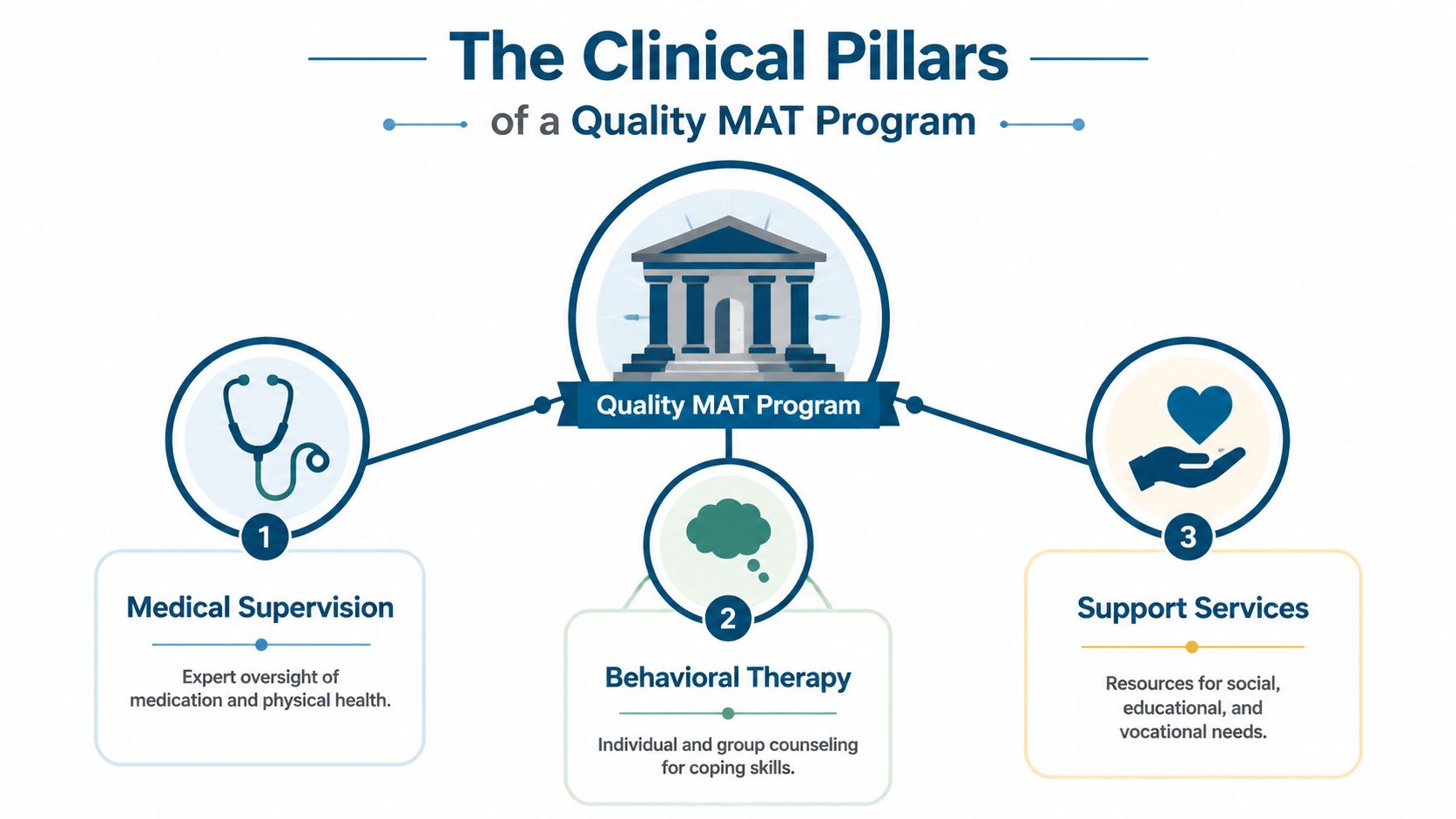
A medication assisted treatment program should feel steady, clear, and human. For a family in Orange County, that often means a first visit where the patient is seen as a whole person, not only as a diagnosis, and where the plan includes medication, counseling, and day-to-day support that can fit real life. Federal guidance says MAT works best when medication is paired with psychotherapy and psychosocial services, and programs that keep people engaged often rely on multidisciplinary teams and flexible requirements that reduce barriers ASPE retention and continuity care.
Medical management keeps treatment safe
Medical management is more than refilling a prescription. It means watching how the patient responds, checking for side effects, and adjusting care when recovery changes shape. In a good program, that monitoring is ongoing because the person sitting in the office today may need a different plan next week.
Programs may also use controlled-substance monitoring and structured check-ins to lower diversion risk and connect dosing to clinical need Care Innovations MAT procedure. That kind of clinical discipline helps treatment stay safe while still remaining accessible.
Behavioral therapy addresses the reasons use started
Counseling gives people room to work on triggers, shame, communication problems, trauma, and the habits that keep addiction active. CBT and DBT are often used because they help patients notice patterns, tolerate distress, and choose a different response when cravings show up. Once medication lowers the daily pressure, those sessions can do deeper work.
Support services help life stabilize
Case management handles the practical side of recovery. It can help with housing, employment, family coordination, and other barriers that can interrupt progress when they are left alone. A person has a harder time focusing on recovery if every day is spent trying to keep life from falling apart.
For readers comparing outpatient intensity levels, a guide for Georgia ASAM Level 1 can help explain how lower-intensity outpatient structures are often organized, even though local programs may differ in detail.
What to Expect in an Outpatient MAT Program
The first step is usually less intimidating than families expect. A patient or family member makes a confidential call, answers a few basic questions, and learns whether the program can move forward with an assessment soon. After that, intake usually includes a fuller review of substance use history, current medications, mental health concerns, family support, and any safety needs that could affect care.
Once the care plan is set, medication begins with close observation. Those early days focus on finding a dose that holds steady, watching how the body responds, and checking whether the person can keep up with daily life while treatment starts to take hold. For adults who still need to work, care for children, or stay in school, outpatient MAT can make recovery possible without putting life on pause.
What a week can look like
A typical week may include a medication check-in, one or more therapy sessions, and time set aside for recovery planning. Some people come in before work. Others schedule visits around family responsibilities. The goal is steady participation, not perfection.
A week in treatment often has a familiar rhythm:
- Monday or Tuesday check-in: A clinician reviews symptoms, cravings, sleep, and how the medication is working.
- Therapy session: The patient talks through triggers, stress, or family conflict with a counselor.
- Support planning: The team helps address practical problems that could interfere with attendance or stability.
- Home routine: The patient practices recovery skills in the same setting where stress often shows up.
Strong outpatient programs also rely on regular monitoring and clear prescribing safeguards. One procedure describes weekly team review and checking the Controlled Substance Monitoring Database with each prescription to support stability and lower risk Care Innovations MAT procedure. That kind of structure can help treatment feel steady instead of chaotic.
Recovery gets easier when the week has a rhythm the patient can repeat.
For Orange County adults who want outpatient structure without leaving home life behind, Zoe Behavioral Health says it offers a full continuum that includes medical detox referrals, PHP, IOP, outpatient treatment, and dual-diagnosis care Zoe Behavioral Health programs.
Choosing the Best MAT Program in Orange County
A family often starts here after realizing that treatment needs to fit ordinary life, not interrupt it completely. A strong program should be licensed, medically supervised, and built around the barriers people face, from work schedules to child care to the fear of starting over. It should offer evidence-based therapy and integrated mental health support, because addiction often overlaps with depression, anxiety, and trauma. It should also make admission feel manageable, since waiting too long can let motivation fade.
What families should look for
A quality outpatient MAT program usually answers the same practical questions clearly.
- Clinical oversight: Who manages medication, and how often are safety checks done?
- Therapy access: Are counseling and behavioral therapies built into care?
- Dual-diagnosis support: Can the team handle mental health and substance use together?
- Admissions speed: How quickly can a person be assessed and placed?
- Continuity: Is there a plan for step-up, step-down, or long-term follow-up?
When a program feels organized, families can picture the week more clearly. Medication visits should feel calm and routine, like a regular medical check-in where symptoms, cravings, sleep, and side effects are reviewed without judgment. Therapy should connect those medical changes to daily life, because recovery often depends on what happens at home, in relationships, and during stressful moments. The best outpatient care also leaves room for adjustment, since the right amount of support can change as a person becomes steadier.
Zoe Behavioral Health describes a small-program model, evidence-based therapies such as CBT, DBT, and EMDR, and an 85%+ completion rate on its own site Zoe Behavioral Health's published materials. Because those figures are self-reported, they should be read as the provider's own claims, not independent verification. Even so, they point to the kind of program families often want, personalized care, clear structure, and a path that does not feel anonymous.
For people weighing options in Orange County, Zoe Behavioral Health is one outpatient center to consider because it combines MAT with therapy, case management, and admissions help close to home. That can matter as much as the medication itself, especially for someone who needs treatment to fit into an already complicated routine.
If medication changes are part of the conversation later, a careful explanation of how to stop Suboxone safely can help families understand why tapering should always be planned with a clinician.
Your Questions About Medication Assisted Treatment Answered
How long does MAT last?
It lasts as long as the person still needs clinical support. Recovery is not a timed package with the same schedule for everyone. Some people need medication for months, while others benefit from a longer period of care, and tapering should be slow because stopping too fast can raise relapse and overdose risk.
Is MAT just replacing one addiction with another?
No. When these medications are taken as prescribed, they help steady the body and lower cravings so the person can focus on recovery work. The goal is not intoxication, it is stability, clearer thinking, and enough room for counseling and daily routines to start helping.
Do all patients need the same amount of therapy?
No. Medication is the center of the plan, but the rest of treatment should be matched to the person sitting in front of the clinician. Some patients need more counseling and support, while others need a lighter layer of behavioral care, and a quality program adjusts to those needs instead of forcing everyone into the same mold.
How does someone start?
The first step is a confidential assessment. From there, the team reviews medical history, substance use patterns, and recovery goals, then builds a plan that fits outpatient life in Orange County. That usually means care that can be added to a workday or family schedule, rather than care that takes over everything at once.
For readers who are also wondering about medication changes later on, this guide on quitting Suboxone safely can help explain why stopping medication should always be planned with a clinician.
The need is still urgent. Many people who could benefit from treatment do not receive it, which leaves families trying to manage a condition that responds better to structured care. If the next step still feels unclear, the safest move is to call and ask for a confidential assessment today.
