
A PRP treatment commonly costs $400 to $2,000 per session, and most patients need 2 to 4 sessions, putting the total at roughly $1,200 to $6,000+. The final bill depends on the treatment area, provider, location, preparation method, imaging, and whether follow-up care is bundled.
A patient can receive two quotes for what appears to be the same injection and still face a dramatic price difference. One clinic may describe a basic blood draw, processing, and injection. Another may include physician-led assessment, ultrasound guidance, a different PRP preparation system, follow-up visits, and a multi-session plan. Comparing only the headline number is how patients either overpay or choose a quote that leaves important care out.
The Two Quotes Problem
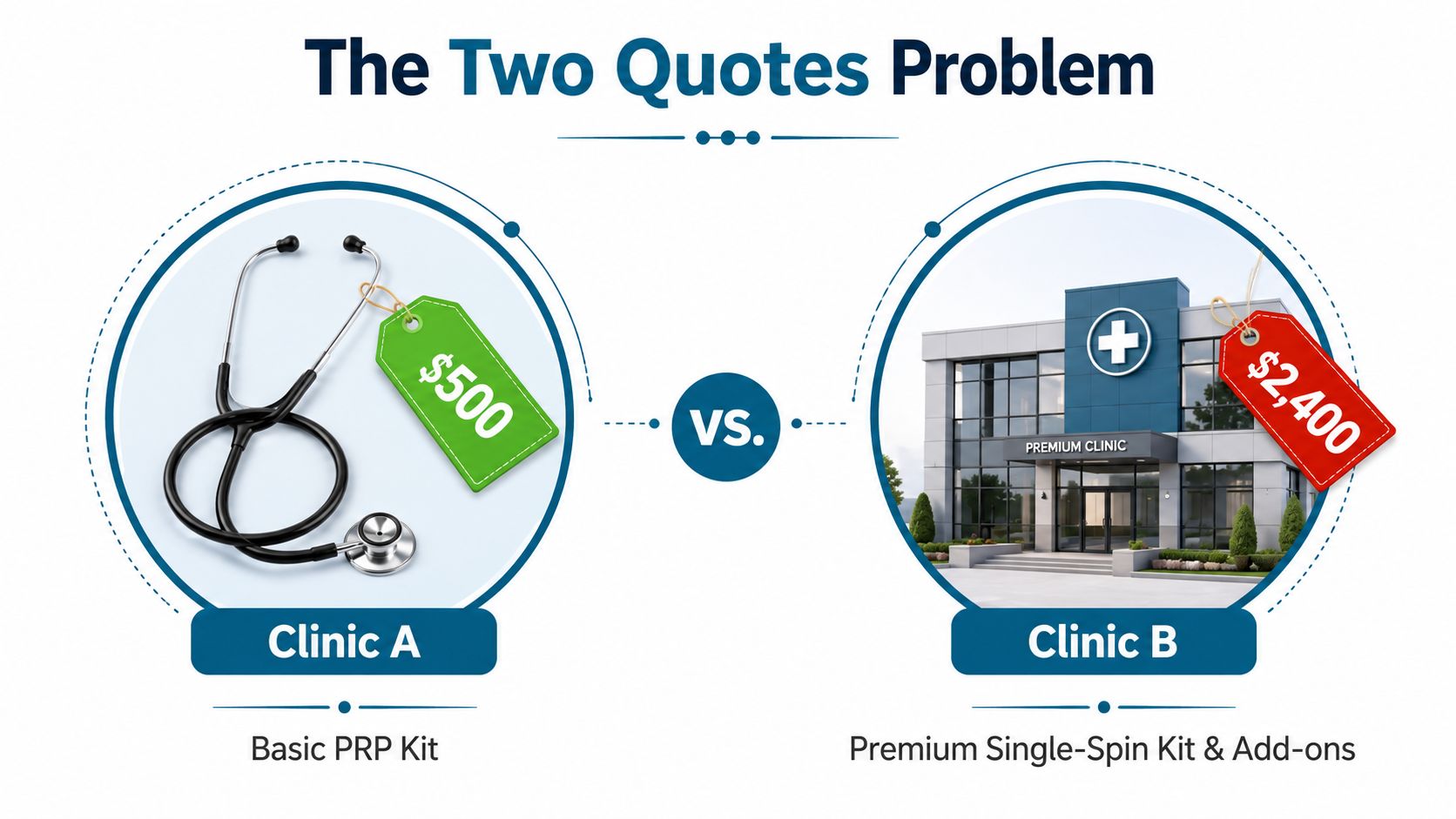
A 42-year-old runner with mild knee osteoarthritis calls two clinics about the same PRP injection. Clinic A quotes $500. Clinic B quotes $2,400. The patient now has two prices, but no reliable way to tell whether the difference reflects better care or a larger bill.
One clinic may quote only the blood draw, processing, and injection. The other may include a physician assessment, ultrasound guidance, a different preparation system, follow-up visits, and a multi-session plan. Choosing by headline price alone can lead to two costly mistakes: paying for extras that do not fit the indication, or accepting a low quote that leaves important clinical decisions unclear.
That is the problem with researching PRP treatment cost online. A national average cannot show how body area, provider type, geography, clinical setting, and add-ons shape the final bill. A 2019 peer-reviewed review reported a mean PRP injection cost of $707, with a standard deviation of $388 and an observed range from $175 to $4,973 across 818 injections. The reviewed PRP pricing data demonstrates why one average is a weak basis for choosing a clinic. The spread reflects differences in anatomy, indication, setting, and what the quoted fee includes.
What the patient needs to decode
Ask both clinics the same questions before comparing their prices:
- Provider credentials: Who evaluates the condition, and who performs the injection?
- Preparation method: What kit, spin protocol, and platelet or leukocyte profile does the clinic use?
- Guidance: Is ultrasound or another imaging method included?
- Session count: Does the quote cover one visit or the recommended series?
- Bundling: Are consultation, imaging, follow-up, and reassessment included?
A higher quote can reflect more involved care, but the clinic should show exactly what the added money buys. An itemized quote is the minimum standard for a useful comparison.
For 2026, use $400 to $2,000 per session as a practical reference point. Plans can reach $1,200 to $6,000+ when multiple visits are recommended, according to these 2026 PRP pricing ranges. Ask for the treatment area, provider type, guidance method, preparation details, session count, and bundled services in writing before paying.
What PRP Is and Why It Costs What It Costs
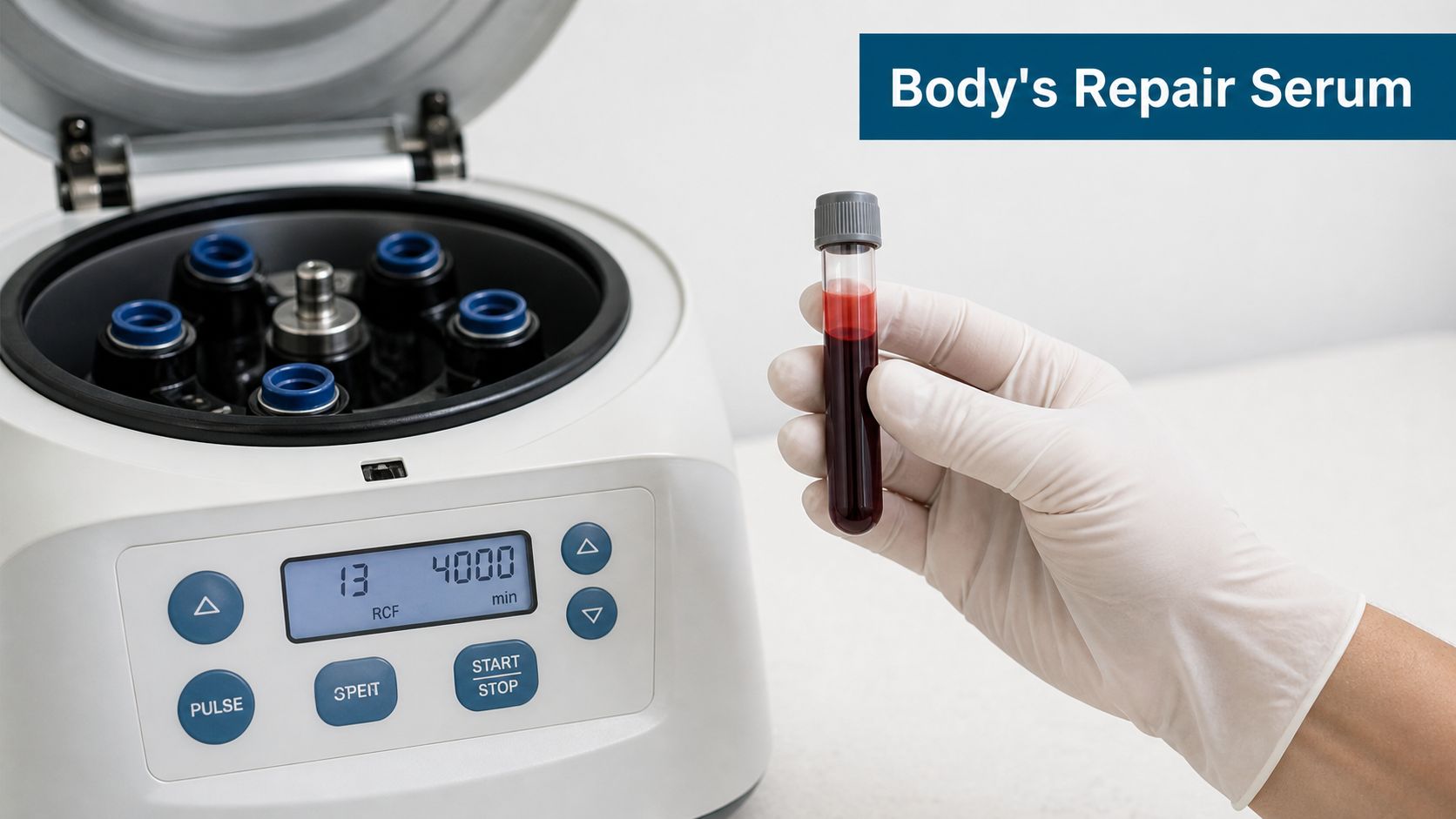
A clinic can quote one fee for a scalp session and another for a knee injection because PRP is a process, not a single standardized product. Platelet-rich plasma, or PRP, is prepared from the patient's own blood. A small blood sample goes into a centrifuge, which separates its components. The clinician collects plasma containing a concentrated platelet component and injects it into the targeted joint, tendon, scalp, or facial area.
The “concentrated repair serum” analogy helps explain the process, but it should not be treated as a promise of repair. Results depend on the indication, sample preparation, injection accuracy, and whether PRP suits the condition in the first place. Ask the clinic to explain those choices before accepting a package price.
The bill begins before the injection
The per-session charge usually reflects several separate costs:
- Single-use kit: The sterile collection and processing kit adds consumable cost, and its design affects what the clinic can prepare.
- Centrifuge use: The device requires purchase, maintenance, calibration, and trained operation.
- Sterile processing: Staff draw blood, process the sample, prepare the injection, and maintain sterile technique.
- Clinical labor: A trained phlebotomist, nurse, or physician may handle different stages of the draw-and-spin process.
- Injection skill: The clinician's examination, anatomical knowledge, and technique make up the professional component of the visit.
The provider type and treatment area also influence the total. A specialist performing an image-guided injection may charge more than a general clinic offering a basic protocol. That higher fee only makes sense when the added evaluation, preparation, or guidance fits the indication.
PRP also comes in different preparation profiles. Leukocyte-rich PRP, or LR-PRP, contains more white blood cells, while leukocyte-poor PRP, or LP-PRP, contains fewer. The appropriate choice can vary by condition and clinician protocol. A quote that says “PRP” leaves out a meaningful detail, so ask which preparation the clinic plans to use.
Why the session count matters
A per-injection price is incomplete without the recommended schedule. Pricing guidance commonly describes 2 to 4 sessions for many patients, although the appropriate number depends on the condition and clinical plan, as explained in this PRP For HairLoss cost guide. A low single-session fee may cost more overall if the plan adds appointments, consultations, or imaging separately.
Request the preparation type, included services, and expected visits in writing. Compare the full plan, not just the first charge.
PRP Cost by Treatment Area in 2026
A quote for knee PRP can look nothing like a quote for scalp or facial treatment. The treatment area changes preparation, appointment length, provider type, imaging needs, and add-ons. Current pricing guides place PRP at $400 to $2,000 per session. Orthopedic and tendon care often falls around $500 to $1,500, hair restoration around $400 to $1,200, and cosmetic facial PRP around $700 to $2,000 (2026 treatment pricing ranges).
Joint and tendon treatment
For knee osteoarthritis, a practical orthopedic quote usually lands within the middle of the broader range. A specialist consultation, ultrasound guidance, customized preparation, or hospital setting can raise the bill. A lower quote may come from a private clinic, a basic protocol, or a package discount. Ask what the clinic has left out before treating the price as a bargain.
Tendon procedures for tennis elbow, Achilles problems, or rotator cuff injuries can also vary. Injection location affects technique, and some anatomy requires imaging guidance. Compare the diagnosis, the clinician's experience with that area, and the services included, rather than comparing “joint” with “tendon” alone.
Scalp and facial PRP
Hair restoration and facial rejuvenation are commonly sold as packages instead of single injections. Scalp care may involve an initial series, while facial PRP may include microneedling or treatment across multiple areas. Separate the PRP fee from every cosmetic or device-based service before agreeing to the package. These cost per PRP session factors can materially change the final bill.
Facial PRP may reach the higher end of the range when the package includes a cosmetic consultation, topical products, microneedling, or several facial areas. A premium appearance-focused package does not automatically provide better value for your indication. Ask which part of the fee pays for blood processing, which pays for the add-on, and whether each service is medically relevant to your goal.
Quick-reference pricing
| Treatment Area | Per-Session Range | Typical Sessions | Total Cost Range | Notes |
|---|---|---|---|---|
| Knee osteoarthritis | $500 to $1,500 | 1 to 3 | $1,500 to $4,500 | Imaging, specialist care, and preparation affect the quote |
| Scalp hair restoration | $400 to $1,500 | 3 to 4 initial sessions | $1,800 to $6,000 | Maintenance may cost $300 to $800 every 4 to 6 months |
| Facial rejuvenation | $500 to $1,200 | 3 | $1,500 to $3,600 | Microneedling and multiple areas may add cost |
| Tendinopathy | $600 to $1,800 | 1 to 2 | $1,200 to $3,600 | Anatomy, guidance, and diagnosis influence pricing |
| Sexual wellness | $1,200 to $2,500 | 1 to 2 | Not specified | Ask whether consultation and follow-up are included |
Use these ranges to compare quotes, not to predict a guaranteed result. Geography and facility pricing still apply. Before paying, request the treatment area, preparation, number of sessions, included guidance, follow-up, and every add-on in writing.
Six Factors That Quietly Move Your Final Price
Two clinics can use the same PRP label and send very different invoices. Before paying, identify which pricing lever is responsible and what the quote includes.
Provider credentials
A clinician who regularly assesses musculoskeletal or dermatologic conditions may charge more than a general operator. That fee covers judgment as well as needle placement. Ask who will perform the injection and whether that person treats your specific anatomy routinely.
Geography
Rent, staffing, overhead, and local demand affect pricing. Nationwide hospital data reported PRP charges from $350 to $2,815, with a median of $800 and an interquartile range of $400. The Northeast had the highest prices in that study (national orthopaedic hospital pricing study). Use geography to question a quote, not to judge quality by itself.
Facility type
A hospital outpatient department may add a facility charge that a private clinic does not. Require an itemized quote separating the professional fee, facility fee, consultation, imaging, and processing charge.
Kit and centrifuge
The kit controls how blood is collected and processed. Ask for the kit brand, whether the preparation is single-spin or double-spin, and why that method fits your indication. A more elaborate setup deserves a clinical explanation, not just a higher price.
Imaging guidance
Ultrasound guidance may be included or billed separately. It can improve anatomical precision for a joint or tendon target. Confirm whether guidance is part of the quoted fee and who performs it.
Session count
A package can reduce the effective session price, but only when every visit is clinically justified. Do not buy a large bundle before the diagnosis is established. Ask what happens if the first treatment fails and whether unused sessions can be refunded or reassigned.
| Pricing Lever | Low-End Impact | High-End Impact | Typical % Swing |
|---|---|---|---|
| Provider credentials | Lower professional fee | Higher specialist fee | 10% to 30% |
| Geography | Lower local overhead | Higher regional overhead | 10% to 40% |
| Facility type | Private-clinic pricing | Hospital and facility fees | 20% to 50% |
| Kit and centrifuge | Basic processing | More involved preparation | 10% to 25% |
| Imaging guidance | May be included | Separate add-on | 5% to 20% |
| Session count | Single visit | Multi-visit package | 10% to 30% |
These percentage ranges are planning estimates, not published national benchmarks. The clinic should show the actual dollar effect for your quote.
Practical rule: Ask, “Which of these six factors is driving the price difference?” Then request the answer in writing. Clear itemization supports a fair comparison. Evasion is a reason to pause.
PRP vs Other Treatments on Real Cost
A clinic may quote a lower price for one injection and a much higher package for another. Compare what the treatment is intended to accomplish, how long relief may last, and whether the proposed option fits the joint's condition. PRP is not appropriate for every stage of osteoarthritis, so price alone cannot determine value.
A 2019 review reported average stem cell injection costs of $2,728 and mean PRP costs of $707 in the same dataset. PRP was the lower-cost biologic option in that analysis, but the figures do not prove superior results. They explain why patients compare PRP with other biologic treatments. The article's established PRP planning range remains $400 to $2,000 per session, depending on the body area, provider, location, preparation, and included services.
| Treatment | Cost pattern | Relief and value questions |
|---|---|---|
| Corticosteroid injection | Often lower upfront cost than biologic injections | Relief may be shorter. Ask how frequently repeat injections are appropriate and what limits apply. |
| Hyaluronic acid injection | Typically priced as a single injection or a series | Compare the full series cost, not only the first visit. Ask what evidence supports it for your diagnosis. |
| PRP | $400 to $2,000 per session | Cost depends on preparation and guidance. Confirm the number of sessions, follow-up care, and refund terms before paying for a package. |
| Surgery | Higher upfront cost and facility-related expenses | It may provide a more definitive structural solution when joint damage is advanced. Ask whether nonsurgical care is still clinically reasonable. |
Economic modeling for symptomatic knee osteoarthritis found that PRP could be cost-effective only when total treatment cost stayed below a payer-perspective threshold of $1,192.08 over 12 months. Another analysis found that $728 per injection was not cost-effective compared with delaying total knee arthroplasty for less than 10 years (economic modeling of PRP pricing). These figures are decision benchmarks, not promises about individual outcomes.
Use them to challenge expensive bundles. PRP can offer better financial logic for a carefully selected patient with symptomatic, earlier-stage disease who is discussing whether more invasive care can be delayed. Its value weakens when the joint is severely damaged and replacement is the appropriate treatment path.
Keep PRP and stem cell pricing separate. Their preparation methods, clinical claims, and cost structures differ. Review this stem cell treatment price breakdown, then ask the clinic to explain exactly what its quoted package includes and why that option fits your indication.
Insurance, Financing, and Smart Questions to Ask
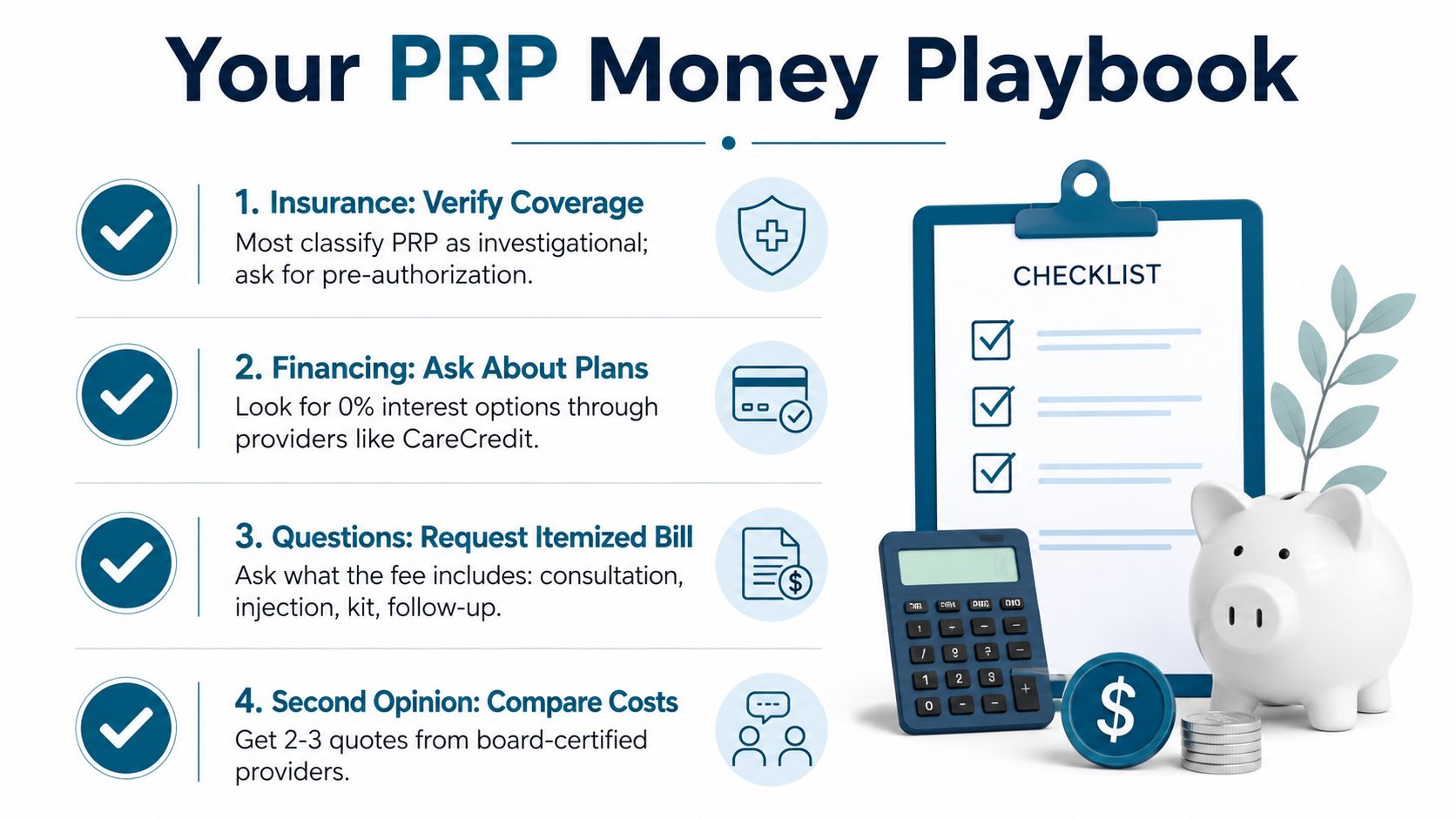
Most patients should approach PRP as a self-pay service unless the insurer gives a specific written coverage decision. Many carriers classify PRP as investigational or cosmetic, although exceptions may exist for certain chronic tendon injuries after conservative treatment fails or for some workers' compensation claims.
A direct insurance verification script
The patient should call the member services number and ask whether CPT code 0232T is covered for the specific diagnosis and treatment site. The caller should request a written benefit determination and record the representative's reference number. A clinic's statement that “insurance may cover it” isn't enough to justify booking.
HSA and FSA eligibility may be possible when a physician documents medical necessity, even if the insurer declines reimbursement. Patients should ask the clinician whether a medical necessity letter can be provided and retain the receipt, diagnosis, and supporting documentation.
For broader planning around coverage and treatment expenses, patients can also review this rehabilitation insurance cost resource. The same principle applies here: verify benefits directly, request written details, and don't confuse eligibility to use an account with insurance coverage.
Financing and the questions that protect the budget
Financing can spread the cost through medical credit arrangements or an in-house plan. Patients should read the full agreement, including the interest rate, promotional conditions, late fees, and what happens if treatment is stopped early.
Before booking, every patient should ask:
- Who performs the injection? Confirm the clinician's credentials and role.
- What kit and spin protocol are used? Ask whether the preparation is leukocyte-rich or leukocyte-poor.
- Is ultrasound guidance included? Clarify whether it is required for the target area.
- How many sessions are bundled? Request the total plan, not just the first-visit fee.
- What happens if there is no response? Ask about reassessment and additional charges.
- Is follow-up imaging included? Separate clinical review from imaging fees.
- What is the cancellation policy? Get the policy before paying a deposit.
- Is the quote all-inclusive? Ask about consultation, processing, supplies, and add-ons.
Why the Most Expensive PRP Is Not Always the Best
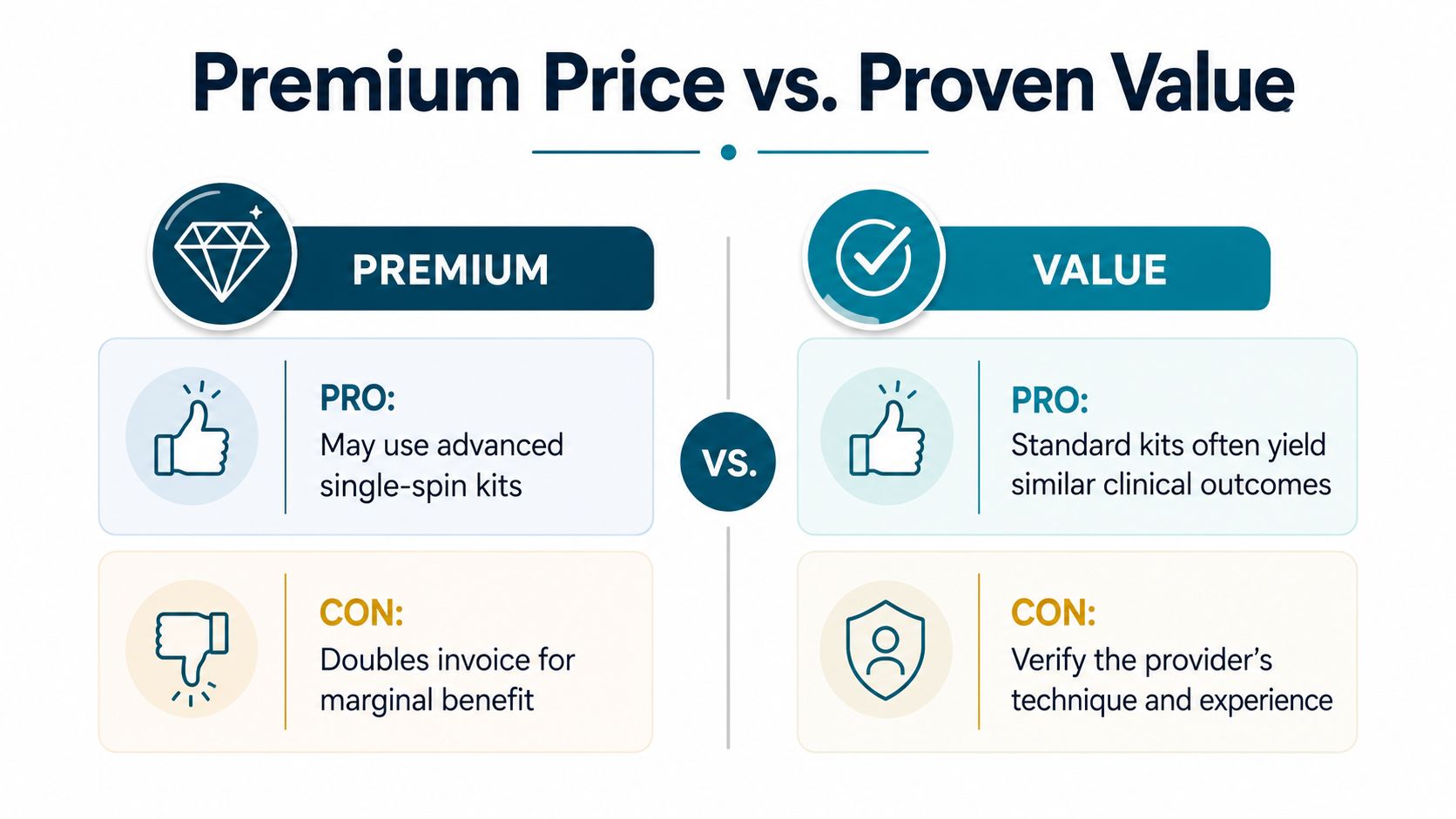
A higher invoice doesn't prove a better outcome. Clinics may charge more for premium kits, branded protocols, growth-factor enhancements, or elaborate packaging, but patients still need an explanation of what those upgrades change for the specific indication.
The most useful questions focus on measurable preparation and clinical technique:
- Platelet concentration: Ask how concentration is measured against the patient's baseline.
- Leukocyte content: Ask why the clinician selected leukocyte-rich or leukocyte-poor preparation.
- Injection accuracy: Ask whether imaging guidance is used and who performs the procedure.
- Condition-specific evidence: Ask whether the clinic can provide published success rates for the patient's diagnosis.
If staff can't explain the kit, spin method, target concentration, or rationale for the protocol, the premium claim may be marketing rather than meaningful medical value. A polished package and a higher fee don't replace diagnosis, appropriate patient selection, or accurate injection.
The strongest quote is the one that explains what the patient receives, why that protocol fits the condition, and what happens if the expected response doesn't occur.
Patients making broader decisions about spending on care may also benefit from this resource on investing in personal recovery. The same discipline applies to PRP: value should be judged by documented care and fit, not by presentation alone.
Your Next Steps and How to Get a Real Quote
A useful decision doesn't require endless research. It requires a written comparison that separates treatment suitability from sales language.
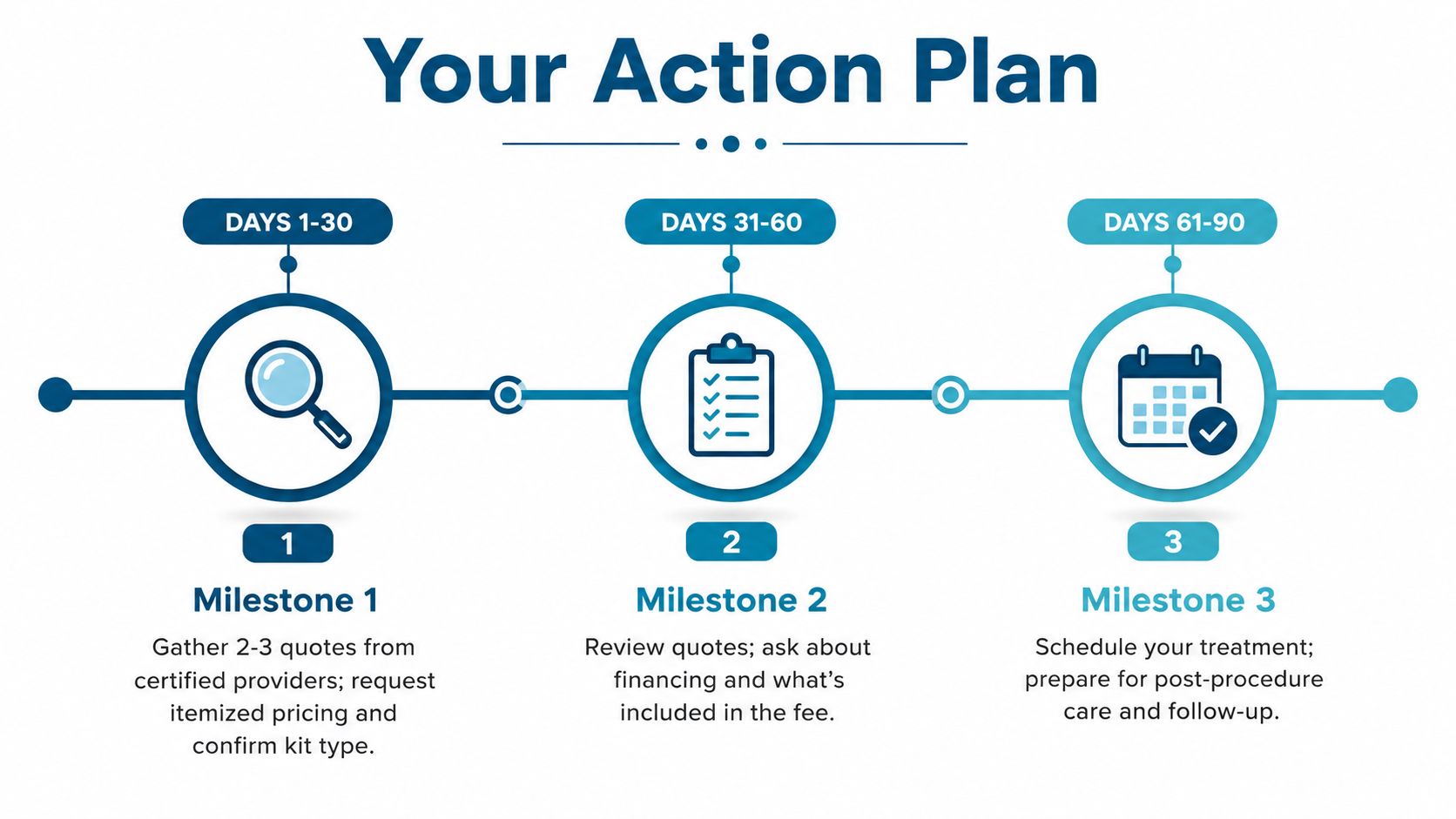
Days 1 to 30
Gather 2 to 3 consultation quotes from qualified providers. Request itemized pricing, the preparation method, the clinician's credentials, imaging details, the planned session count, and the cancellation policy.
Days 31 to 60
Verify insurance directly using the diagnosis and CPT code. Ask whether a medical necessity letter could support HSA or FSA use. Compare financing terms, including any in-house plan, total repayment amount, promotional rate conditions, and consequences of missed payments.
A transparent quote should answer these questions without pressure. Patients seeking a wider framework for evaluating treatment financing can review this medical treatment loan guidance, then apply the same standards to any healthcare payment plan.
Days 61 to 90
Schedule the first session only after the diagnosis, price, protocol, and follow-up plan are clear. Record a baseline for pain, movement, activity, or another condition-specific outcome, then set a re-evaluation checkpoint at the 90-day mark. That makes the decision more accountable than relying on a vague impression that the treatment “seems to be working.”
Zoe Behavioral Health offers insurance verification, admissions guidance, personalized treatment planning, and flexible payment discussions for people evaluating outpatient addiction, alcohol, drug, or mental health care. Readers who need help understanding treatment options and financial logistics can visit Zoe Behavioral Health to request a confidential consultation and discuss next steps with the admissions team.
A personalized quote protects both the budget and the treatment decision. The patient who asks for itemized costs, preparation details, provider credentials, and follow-up terms is far less likely to mistake an impressive invoice for effective care.
