
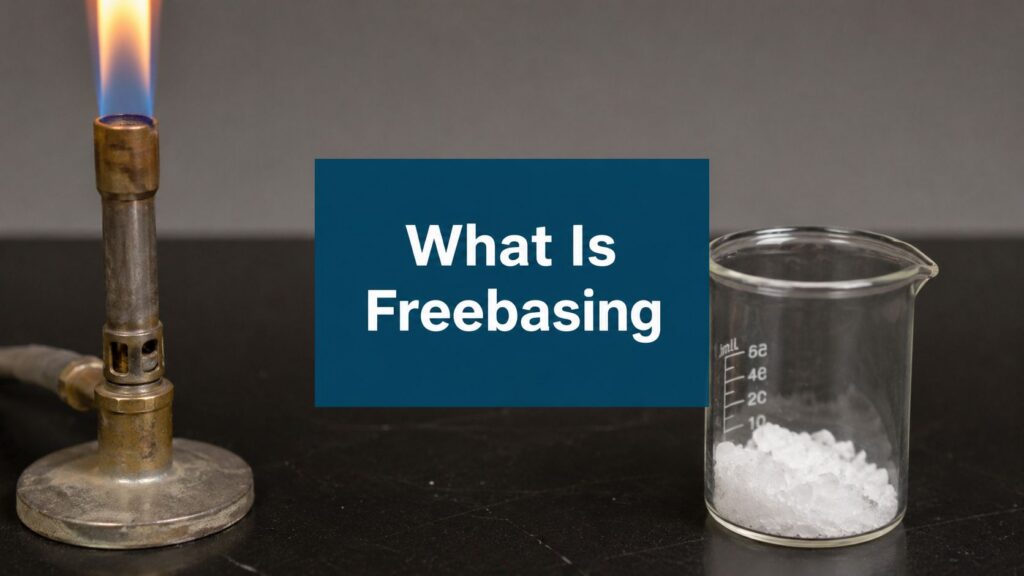
Freebasing is the process of converting cocaine hydrochloride into a smokable base form. That route matters because smoked cocaine can reach the brain within seconds, producing a rapid effect that can reinforce repeated use.
A family member may notice a person disappearing into a bathroom or garage, hiding a glass pipe, or shifting quickly from restless energy to exhaustion. The word “freebasing” can also create confusion because people sometimes use it interchangeably with smoking crack, even though the preparation methods aren't identical. Understanding the difference helps families recognize danger without turning a medical problem into a moral judgment.
What Freebasing Actually Means
Freebasing is the conversion of cocaine hydrochloride, the salt form commonly found as powder, into cocaine base that can be heated and inhaled. The change removes hydrochloric acid and creates a form more suitable for vaporization. The National Library of Medicine overview of cocaine-related hospital admissions identifies freebasing in the United States during the 1970s, with the first recorded hospital admission tied to freebasing in 1975. By 1979, freebase cases represented 1% of cocaine-related hospital admissions, rising to 7% by 1982, a rapid early-1980s spread.
In practical terms, a person heats the converted substance in an improvised device, which may include a glass pipe or foil, and inhales the vapor. This isn't the same as snorting cocaine powder. The chemical form and the delivery route have both changed, allowing the lungs to move the drug into the bloodstream very quickly.
Why the route matters
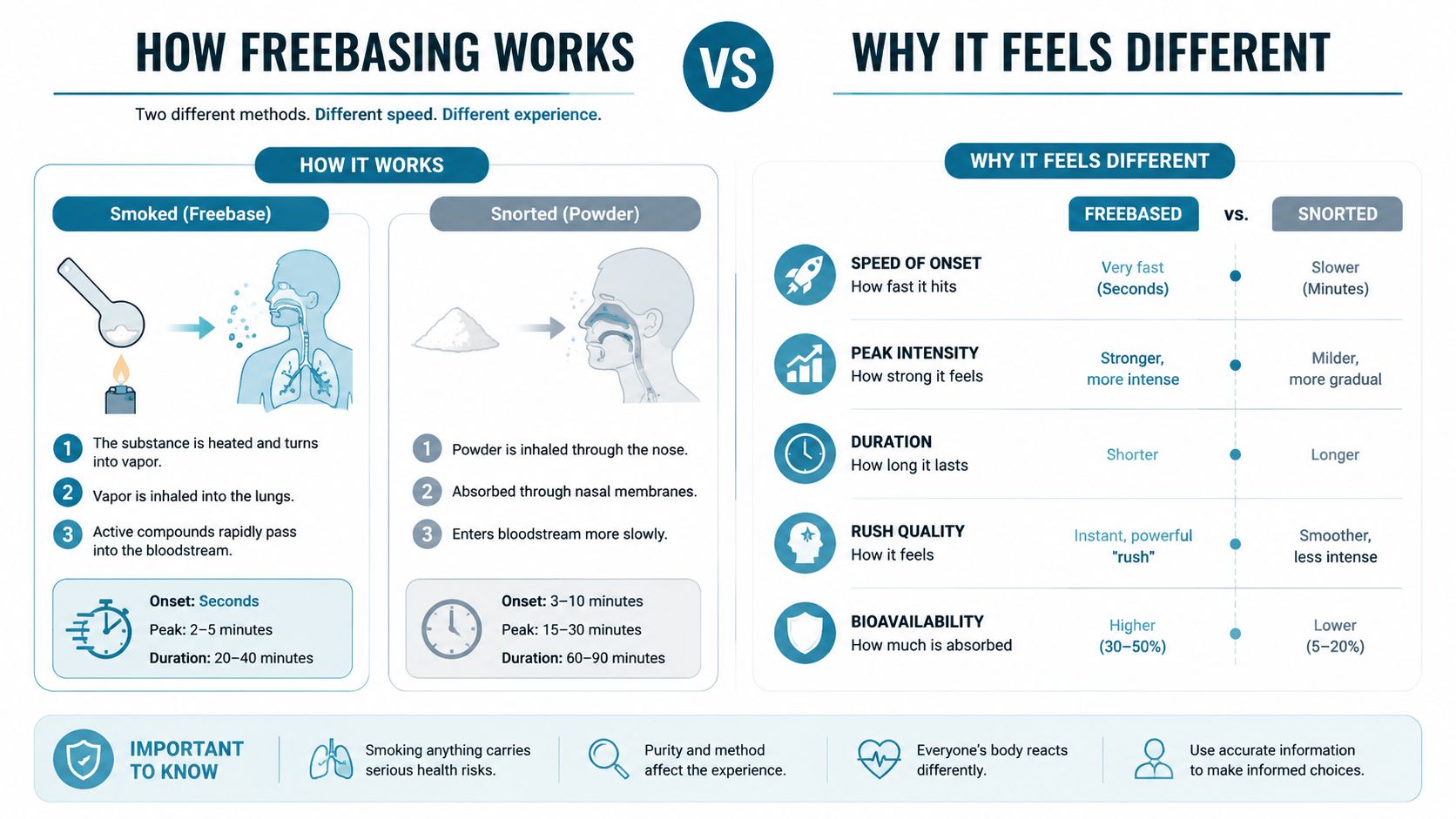
Cocaine hydrochloride doesn't vaporize in the same way as cocaine base. Removing the hydrochloride salt makes the substance more suitable for smoking, while pulmonary absorption creates a much faster transition from inhalation to brain exposure. The result can feel more immediate and more compelling than a slower route.
NIDA-linked material describes cocaine's main action as blocking the dopamine transporter. Dopamine then accumulates in the synapse, amplifying the brain's reward signal, while rapid smoking intensifies the timing of that signal. NIDA material on cocaine's effects and routes of administration explains why this combination can carry a particularly high abuse potential.
Freebasing emerged alongside the rise of crack cocaine in the 1980s and remains clinically relevant wherever stimulant use disorders involve smoked cocaine. The important questions are not only what the term means, but how it differs from other routes, what health problems follow, and which treatment setting can provide enough structure to interrupt the cycle.
How Freebasing Works and Why It Feels Different
The chemistry becomes easier to understand through a simple comparison. Cocaine hydrochloride is a salt form, while freebase cocaine is the base form left after the hydrochloride is removed. A person dissolves the cocaine, adds a base such as ammonia or sodium bicarbonate with water, separates the resulting cocaine base, and dries it before heating. This explanation describes the chemical distinction, not a safe procedure. Heating volatile substances can cause fire, toxic exposure, or serious burns.
From salt form to rapid absorption
Once cocaine has been changed into a smokeable base, the vapor enters the lungs rather than passing first through nasal tissue or the digestive system. The DEA and NIDA-linked factsheet on crack and freebase notes that smoked cocaine base can act in about 7 to 10 seconds. Other clinical material describes effects within 10 to 15 seconds, so the exact experience varies with the substance, dose, equipment, and the person's health.
Snorting cocaine generally produces a slower onset because absorption occurs across nasal membranes. Injection delivers cocaine directly into the bloodstream, but it uses the hydrochloride solution rather than a smokeable base. Freebasing delivers vaporized molecules through the lungs, creating a short path to the brain and a fast reward signal.
Freebase and crack aren't identical terms
Freebase and crack are closely related cocaine base forms, but public language often blurs the distinction. Traditional freebasing is associated with a chemical conversion that may involve ammonia and volatile solvents. Crack is commonly associated with cocaine base made using sodium bicarbonate or baking soda and water. The final products can contain different impurities, but both are smoked and can produce rapid absorption.
The clinical implication is more important than the label. A person may call the substance “freebase,” “crack,” or another street term, yet still face the same urgent concerns: rapid reinforcement, repeated dosing, cardiovascular stress, respiratory injury, and overdose. Families seeking stimulant addiction help may need to describe what was used, how it was taken, and what symptoms appeared rather than rely on the name alone. Additional information about cocaine addiction treatment can help organize that conversation.
Short-Term Effects and Acute Health Risks
A freebasing episode may begin with intense euphoria, increased alertness, agitation, rapid speech, and a feeling of unusual confidence or energy. The person may have enlarged pupils, sweat heavily, move constantly, or become suspicious and irritable. Because the effect fades quickly, the person may return to the pipe repeatedly instead of resting, eating, or drinking water.
The crash can look very different. Fatigue, depressed mood, irritability, anxiety, and strong craving may appear after the stimulation declines. A family member may see someone who was intensely active become withdrawn, exhausted, or emotionally overwhelmed within the same period.
Medical danger can appear without warning
Freebase cocaine can sharply raise heart rate and blood pressure. Acute risks include chest pain, abnormal heart rhythm, heart attack, stroke, seizures, respiratory problems, and overdose. Clinical information on freebase cocaine risks links the rapid delivery route with compulsive redosing and serious cardiovascular, neurologic, and respiratory harm.
Controlled smoking research illustrates why a small-looking amount can still create intense exposure. In one study, after 50 milligrams were placed in a pipe, about 32% could be inhaled, while more than 90% of the recoverable cocaine was delivered in the first four puffs. Blood levels were reported around 800 to 900 nanograms per milliliter three hours after smoking, and the effects were similar to or slightly stronger than 20 milligrams of intravenous cocaine hydrochloride. These findings come from the controlled freebase smoking study.
The preparation adds another layer of risk
Heating volatile or flammable chemicals can cause fires, explosions, facial burns, and airway injury. Improvised glassware may break, and hot vapor can injure the mouth or lungs. Combining cocaine with alcohol, opioids, or other substances can further complicate breathing, heart function, and overdose response.
Emergency rule: Chest pain, breathing difficulty, sudden confusion, loss of consciousness, or a seizure after use requires an immediate call to emergency services. Waiting to see whether symptoms pass can cost critical time.
Addiction Potential and Warning Signs
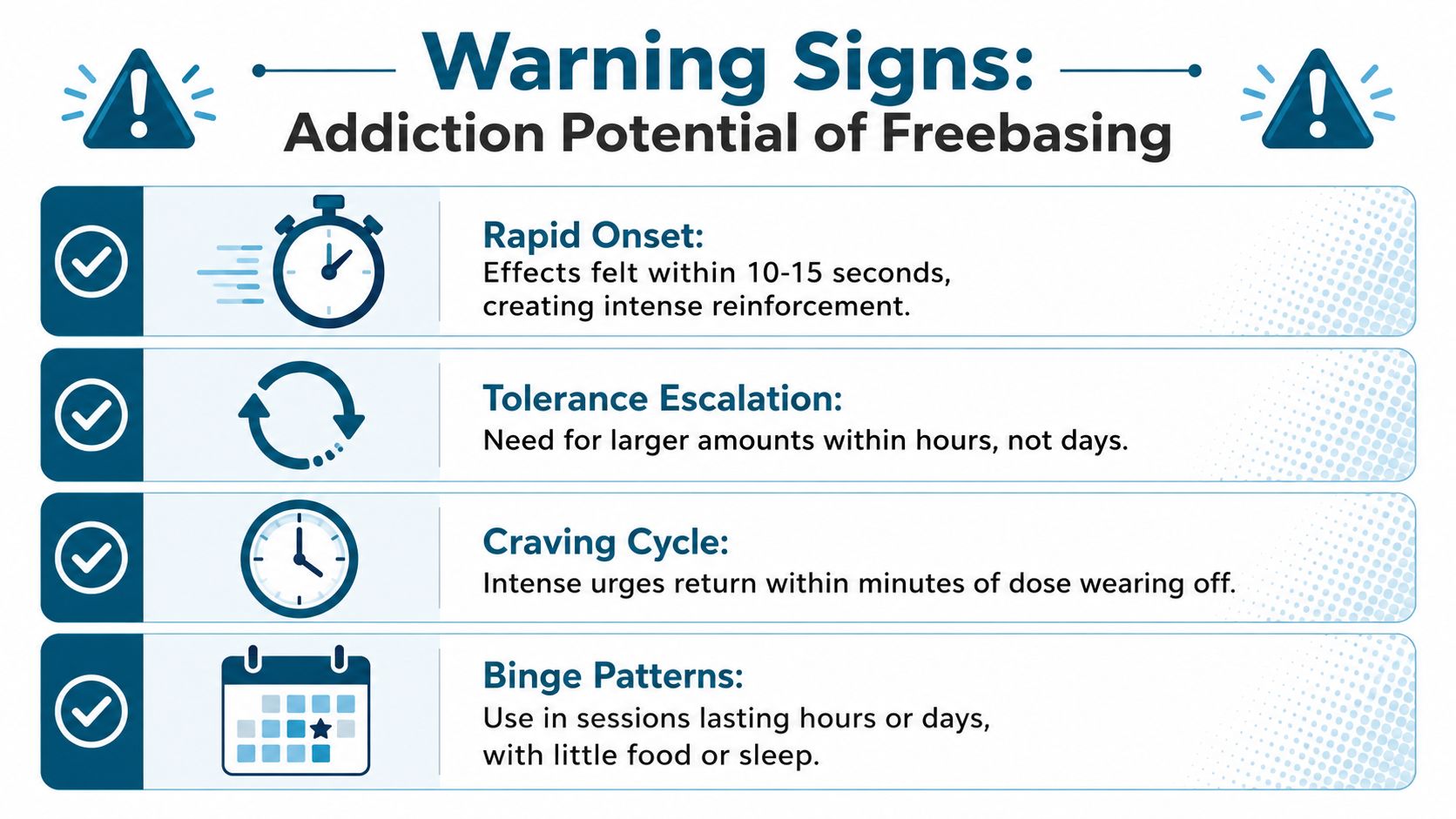
Rapid onset changes the pattern of use. The person receives a powerful reward signal quickly, then may experience a short-lived effect and an abrupt decline. That sequence can create a cycle of craving, redosing, exhaustion, and renewed craving that becomes difficult to interrupt without structured care.
Tolerance may lead someone to use more often or repeat doses during one session. The person may describe wanting only one use but continue returning to the pipe after the initial effect fades. Sleep, meals, work, and relationships can become secondary to obtaining and using cocaine.
Signs families may recognize
No single sign proves that someone is freebasing. A cluster of changes deserves attention, especially when physical symptoms and secretive behavior occur together.
- Smoking equipment: Glass pipes, scorched foil, unusual lighters, or burnt items may appear in hidden spaces.
- Use-linked mood shifts: Euphoria or agitation may be followed by irritability, sadness, fatigue, or emotional withdrawal.
- Sudden secrecy: The person may disappear for extended periods, conceal purchases, or avoid questions about where money went.
- Physical changes: Dilated pupils, sweating, rapid breathing, burns around the lips or fingers, and sleep disruption can accompany stimulant use.
- Withdrawal-like symptoms: Fatigue, depression, irritability, and intense cocaine craving may follow repeated use.
Polysubstance use raises the stakes. Some people combine cocaine with alcohol to change the comedown, opioids to manage distress or withdrawal, or sedating medications to sleep. The interaction can increase overdose and respiratory danger, particularly when the person or family doesn't know the strength or contents of the substances involved.
A family can learn more about behavioral patterns through this guide to signs of addiction. Addiction is a treatable medical condition involving brain function, behavior, health, and environment. Shame may conceal the problem, but it doesn't resolve the biological drive to repeat use.
Immediate Safety, Harm Reduction, and Legal Reality
Safety comes before an argument about treatment. If a person has chest pain, a seizure, breathing difficulty, severe confusion, or loses consciousness, someone nearby should call 911 immediately and follow the dispatcher's instructions. A caller should explain what may have been used and when, because that information helps emergency clinicians respond appropriately.
If the person isn't ready to enter care, families can still reduce immediate danger without presenting these steps as a guarantee of safety:
- Avoid using alone. Another person can call for help when consciousness, breathing, or heart symptoms change.
- Don't mix substances. Alcohol, opioids, benzodiazepines, and other drugs can make an unpredictable situation harder to manage.
- Keep naloxone available when opioids may be involved. Naloxone won't reverse cocaine toxicity, but it can address an opioid component in a mixed-substance emergency.
- Reduce household hazards. Secure medications and firearms, and keep children away from pipes, foil, chemicals, and residue.
- Don't attempt preparation. Volatile chemicals, heat, and improvised equipment create fire, explosion, and burn risks. Information on freebasing preparation hazards describes these dangers before consumption even occurs.
Legal concerns shouldn't block care
Cocaine in any form, including freebase cocaine, is a Schedule II controlled substance under federal law. Possession, distribution, and drug paraphernalia can involve different penalties, and state laws vary. A criminal concern doesn't prevent a person from seeking medical treatment, confidential assessment, or emergency care.
Treatment begins with safety, not punishment. A family can address legal questions separately while making sure a medical emergency receives immediate attention.
Treatment Pathways That Actually Work
Treatment should match the person's medical needs, stimulant use pattern, mental health symptoms, living environment, and ability to remain safe outside a program. The American Society of Addiction Medicine continuum ranges from early intervention and outpatient services through intensive outpatient care, partial hospitalization, residential treatment, and medically supported services when needed.
For many adults, outpatient care offers structure without removing them entirely from work, school, parenting, or home life. A person who can sleep safely at home may benefit from a daytime program, while someone facing acute medical instability, unsafe housing, or uncontrolled polysubstance use may need a higher level of care first.
Comparing outpatient levels
| Level of Care | Weekly Hours | Living Situation | Best Fit For |
|---|---|---|---|
| Partial Hospitalization Program | Typically 20 or more clinical hours per week | Returns home each evening when safe | Adults needing daily therapy, close clinical structure, and medical oversight |
| Intensive Outpatient Program | Usually 9 to 15 hours per week | Lives at home or in coordinated supportive housing | People stepping down from PHP or entering care while maintaining key responsibilities |
| Standard outpatient care | Schedule varies by clinical plan | Lives at home | People who can use therapy, groups, and recovery supports with less frequent contact |
PHP usually combines daily therapy, skills work, care coordination, and clinical monitoring. IOP provides a substantial weekly schedule while allowing greater flexibility. Standard outpatient counseling, group therapy, peer recovery support, and family sessions can continue as the person stabilizes.
Where MAT fits
There isn't an FDA-approved medication specifically for cocaine use disorder. Medication-assisted treatment can still be relevant when alcohol, opioid, or nicotine use also requires care, and clinicians may consider off-label options such as bupropion, topiramate, or modafinil based on the individual's medical situation. Medication decisions require assessment, monitoring, and attention to co-occurring psychiatric conditions.
Zoe Behavioral Health provides PHP and IOP tracks, dual-diagnosis care, family programming, medication-assisted treatment for opioid and other substance dependencies, referrals to medical detox, outpatient counseling, and sober-living coordination. Families may also find value in broader professional education about helping professionals find balance, particularly when supporting someone through a demanding treatment process.
What Families Can Do Right Now
The first day doesn't need to contain a confrontation, an ultimatum, and a complete treatment plan. A calmer approach often gives a loved one more room to acknowledge what's happening.
A practical first-day plan
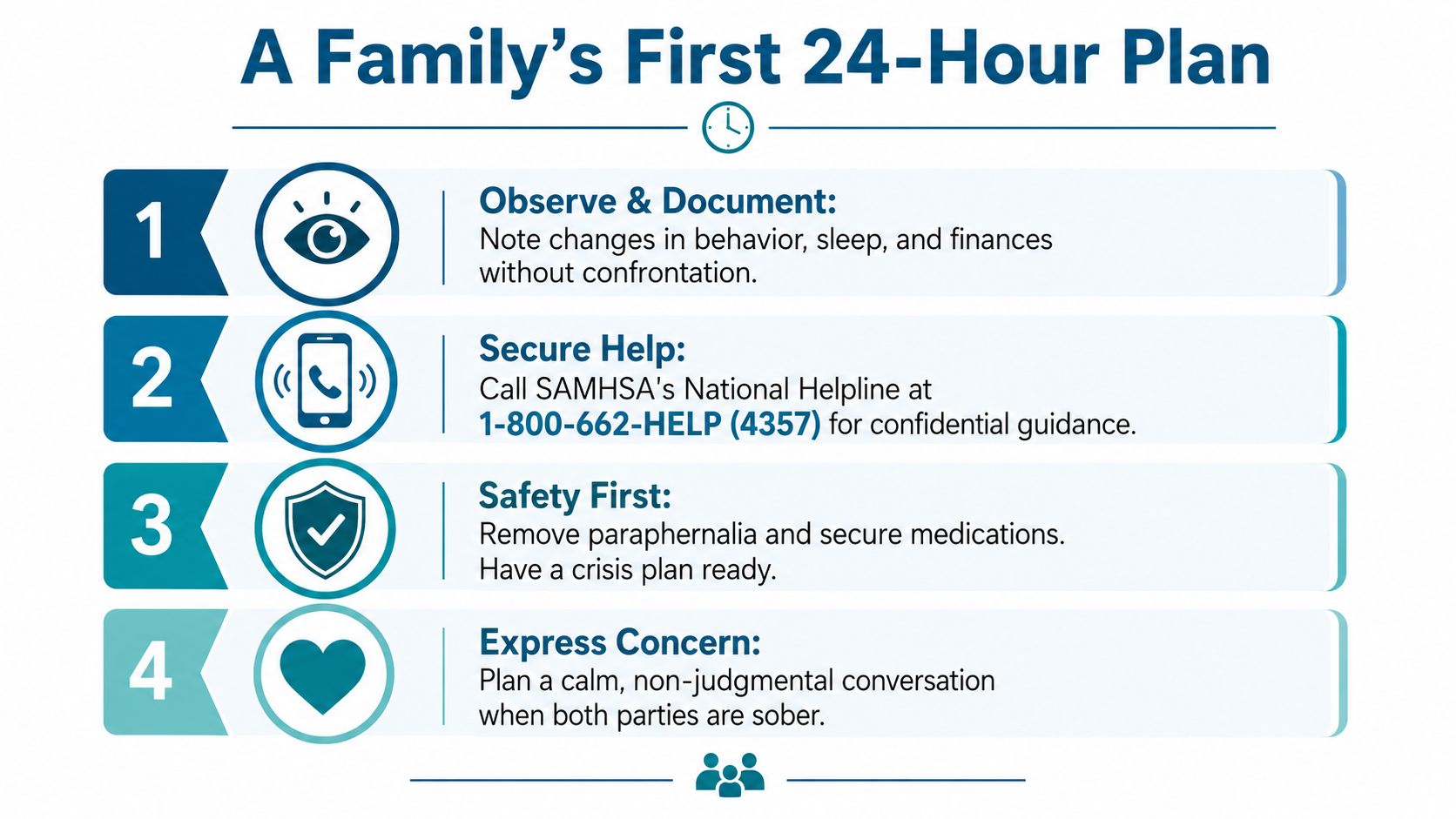
- Observe and document: Note changes in sleep, mood, physical symptoms, missed responsibilities, spending, and unexplained equipment. Record observations without declaring a diagnosis.
- Choose a sober moment: Avoid raising the subject while the person is intoxicated, agitated, crashing, or experiencing paranoia.
- Use specific statements: “There have been several nights without sleep, and chest pain happened after smoking” is more useful than “You're ruining everything.”
- Ask about immediate safety: Determine whether the person has used recently, is alone, has mixed substances, or has symptoms requiring emergency care.
- Prepare practical information: Gather insurance details, work or school schedules, childcare needs, medications, and any recent medical or psychiatric history.
- Seek guidance even if the person refuses: Family members can ask about safety planning and treatment options without waiting for a crisis.
Families can also use support for families of addicts to identify communication and boundary-setting resources. A confidential assessment can clarify whether PHP, IOP, standard outpatient care, medical detox referral, or another level of support is appropriate. Earlier contact may preserve more outpatient options and allow the person to enter care before a cardiac event, severe psychiatric episode, legal problem, or dangerous combination of substances forces the issue.
Recovery from stimulant use disorder is a clinical pathway, not a measure of character. Zoe Behavioral Health can help a family turn concern into a confidential assessment, a safety plan, and a level-of-care recommendation. A single phone call is a practical first step, even when the loved one isn't ready to explain everything.
Zoe Behavioral Health offers structured PHP and IOP care, dual-diagnosis treatment, family programming, and coordinated referrals for people affected by freebasing and cocaine-related substance use. Families can visit Zoe Behavioral Health to request confidential admissions guidance and begin discussing the safest next step.
