

The search often starts the same way. A person knows something isn’t working, maybe anxiety is escalating, alcohol use is getting harder to control, opioid dependence is shaping every decision, or depression is colliding with work and family life. Then the browser tabs open. Insurance portals, provider bios, scattered reviews, referrals from friends, and a growing sense that finding help has become a second job.
That stress doesn’t mean the process is going badly. It usually means the stakes are real.
In behavioral health, shopping for doctors isn’t a shallow exercise. It’s a serious attempt to find a clinician or program that can diagnose accurately, treat both substance use and mental health symptoms when they overlap, and build enough trust for treatment to work. In a market like Orange County, where outpatient options can look similar at first glance, the right fit often comes down to details most directories barely mention.
Why 'Shopping for Doctors' Is a Critical First Step
A lot of people hear the phrase shopping for doctors and feel uneasy. In medicine, “doctor shopping” can describe a harmful pattern, especially when someone moves between prescribers to obtain medications illicitly. That’s a real clinical concern. But that isn’t the same thing as a patient or family doing careful due diligence to find competent, ethical, appropriate care.
Those are two different behaviors, and they shouldn’t be confused.
When someone is trying to find treatment for addiction, trauma, depression, bipolar disorder, or a mix of mental health and substance use problems, seeing more than one provider before choosing care can be reasonable. Complex symptoms don’t always fit neatly into one appointment. According to research on care-seeking patterns in a Canadian emergency department sample, 18% visited three or more different care sites during a single illness episode. That doesn’t prove every multi-provider search is ideal, but it does show that many people need more than one stop before they find the right clinical match.
When careful searching is healthy
A healthy search usually sounds like this:
- The patient wants clarity: “Is this anxiety, trauma, addiction, or all three?”
- The family wants safety: “Who can assess risk and respond quickly?”
- The practical questions matter: “Who takes this insurance? Who offers outpatient structure? Who can coordinate next steps after detox?”
- The emotional question sits underneath all of it: “Who will understand what’s happening here?”
That is not manipulation. That is discernment.
Searching for the right behavioral health provider isn’t indecisive. It’s often the first act of self-protection.
People in smaller communities or outside Southern California may also need geographically relevant support while they sort through options. For readers who want a counseling example from another local setting, resources for Vernon therapy can show how local matching and service fit matter when narrowing choices.
The goal isn’t a quick appointment
The wrong provider can keep someone stuck. A rushed intake, an incomplete assessment, or a narrow focus on symptoms without understanding trauma, substance use, sleep, family stress, or medication history often leads to frustration. Then the patient starts over somewhere else.
A better frame is simple. Shopping for doctors in behavioral health is the process of finding a clinical partner, not just a calendar opening. The strongest programs don’t reduce people to a diagnosis code or a prescription request. They build a plan, explain the reasoning behind it, and create enough continuity that treatment has a chance to stabilize life instead of adding more chaos.
Where to Find Reputable Addiction and Mental Health Care
The search gets easier when it becomes a filtering process instead of an endless scroll. A good approach is to build a short list from reliable channels, then narrow it based on treatment fit, licensing, and responsiveness.
In Orange County, that matters even more because many people aren’t choosing solely by distance or insurance. In urban and suburban behavioral health markets, patients often look for a provider whose approach matches their needs, including clinic culture, holistic offerings, and access to specialized services like medication-assisted treatment, as discussed in this analysis of provider shopping in underserved niches.

Start with channels that can be verified
Some search sources are better than others. The most reliable ones usually allow a patient to confirm whether a provider is operating legitimately and whether the services offered match the actual need.
- Insurance directories: These can help identify in-network options, but they’re often outdated. A listing may remain active even when a clinician has stopped accepting new patients or no longer offers a certain level of care.
- State licensing and regulatory information: For addiction treatment in California, verifying program status through the appropriate state framework matters. A polished website doesn’t replace proper oversight.
- Referrals from current treating professionals: Primary care doctors, therapists, psychiatrists, discharge planners, and sober supports can point families toward programs that are known to communicate well and manage complexity.
- Direct calls to admissions or intake teams: A live conversation reveals much more than a website. It shows whether the organization understands dual diagnosis, can explain levels of care, and can guide next steps without dodging basic questions.
For people who need a straightforward admissions overview before calling programs, this guide on finding help for substance abuse admissions can help organize the early steps.
What to verify on the first call
The first call shouldn’t be treated like a formality. It’s a screening tool.
Ask whether the program handles the specific issue involved. “Addiction treatment” is too broad if the underlying problem includes panic attacks, trauma, bipolar symptoms, chronic relapse after detox, or a need for medication support. Outpatient care is not one thing. Some programs are equipped for step-down care after detox or residential treatment. Others are built for people who still need a high level of structure while living at home. Some can coordinate sober living or family support. Some can’t.
A good admissions conversation should also clarify practical fit:
- Insurance verification
- Program schedule
- Expected time commitment
- Whether psychiatric evaluation is available
- Whether family involvement is part of care
- How quickly treatment can begin
If a provider can’t explain what they do in plain language, that’s not a branding problem. It may be a treatment problem.
Don’t ignore non-clinical fit
Behavioral health treatment works in a human setting, not in an abstract system. Some people need a more structured, direct clinical style. Others engage better in a setting that feels relational, calm, and integrated. Someone rebuilding early recovery may prioritize group atmosphere, gender comfort, outdoor elements, trauma sensitivity, or whether the program feels respectful rather than punitive.
That doesn’t mean choosing based on marketing. It means recognizing that participation improves when the environment makes it easier to stay.
What to Look for Beyond a Medical Degree
Credentials matter, but credentials alone don’t tell a family whether a program can manage the situation in front of them. In behavioral health, the key question isn’t just whether a provider is qualified on paper. It’s whether the provider can assess the full picture, treat the overlapping issues, and keep care coordinated long enough for progress to hold.
The biggest mistake in shopping for doctors is assuming a license or a professional title answers everything.
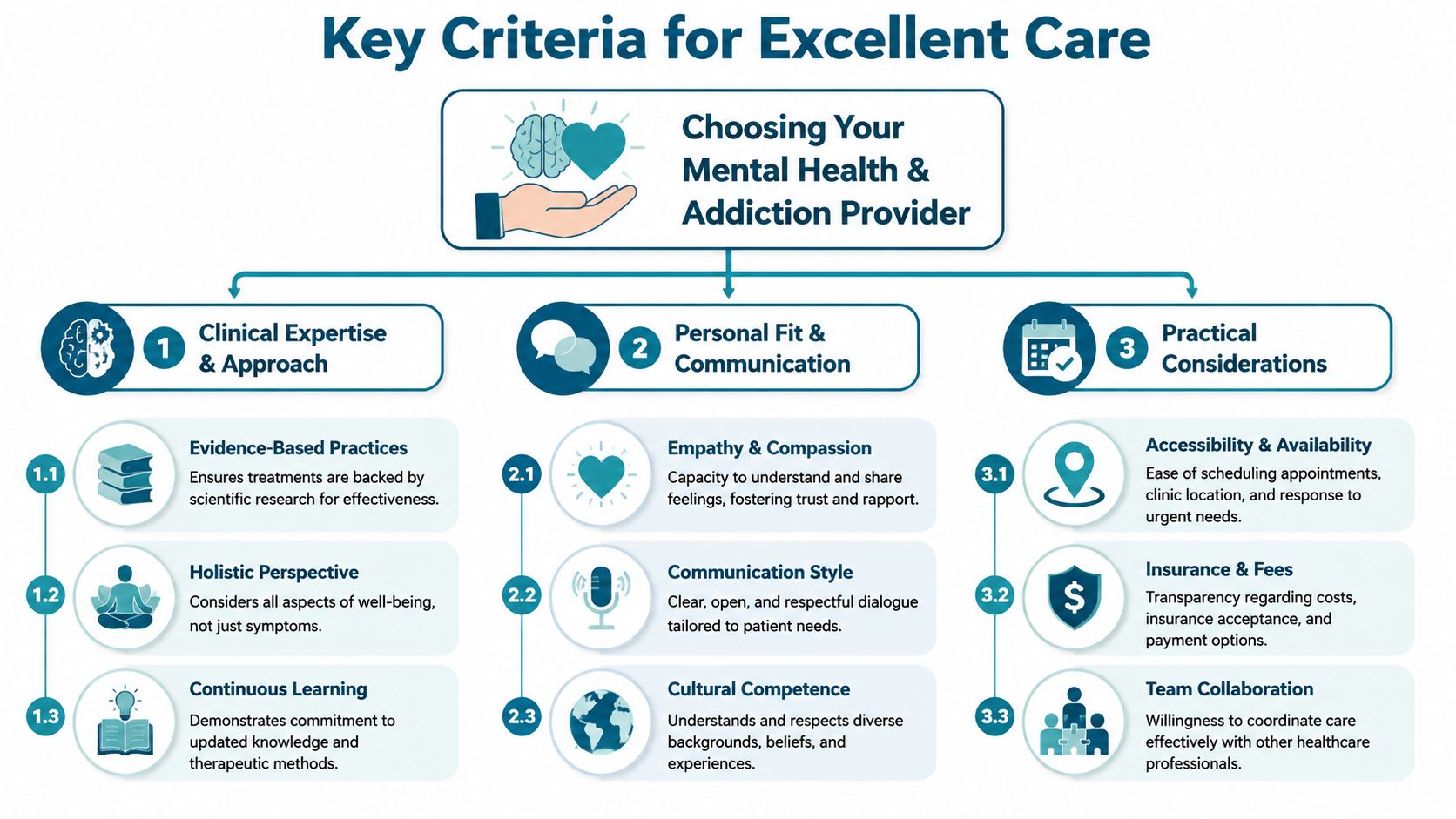
Dual diagnosis isn’t optional for many patients
A large share of people seeking addiction treatment are also dealing with anxiety, depression, trauma symptoms, mood instability, or other psychiatric concerns. When a program treats only the substance use and ignores the mental health side, relapse risk often remains tied to the original pain.
That’s why dual-diagnosis care matters. It means the provider evaluates and treats both substance use disorders and co-occurring mental health conditions together, instead of sending the patient in two disconnected directions.
According to research on doctor-shopping behavior and protective factors, a proper diagnosis, high patient satisfaction, and a strong patient-doctor relationship are protective factors that significantly reduce doctor-shopping behavior, especially among patients with comorbidities such as mental health disorders. In plain terms, when people feel accurately understood and competently treated, they’re less likely to keep bouncing between providers.
MAT is a marker of modern addiction care
Medication-assisted treatment (MAT) is another major quality marker. For opioid and alcohol use disorders, MAT can reduce suffering, support stability, and make it more realistic for someone to engage in therapy and daily life. It isn’t a shortcut. It’s a clinical tool, and good programs know when it fits, how to explain it, and how to pair it with counseling and accountability.
A program doesn’t need to push MAT on every patient. But it should be able to discuss it responsibly.
Look for signs that the provider can answer these questions clearly:
- Who evaluates MAT appropriateness: There should be a defined medical or psychiatric process, not guesswork.
- How MAT fits into therapy: Medication should support recovery planning, not replace it.
- How psychiatric symptoms are monitored: Sleep disruption, trauma activation, cravings, and depression affect one another.
- How treatment changes over time: Good care adjusts as the patient stabilizes.
For readers exploring patient-centered behavioral health models, this overview of the benefits of trauma-informed care highlights why treatment quality depends so much on how care is delivered, not just what services appear on a brochure.
Other markers that separate average from excellent
A strong outpatient provider usually shows quality in ways that are easy to notice once a patient knows what to look for.
- Assessment depth: Intake should cover substance use, mental health history, medications, safety concerns, family context, and prior treatment response.
- Team collaboration: Therapists, medical staff, case managers, and support personnel should work from a shared plan.
- Clear communication: Staff should explain level of care, goals, and next steps without hiding behind jargon.
- Practical flexibility: Schedules should be realistic enough for the person to attend consistently when clinically appropriate.
- Whole-person thinking: Recovery planning should include routines, nutrition, relationships, sleep, and environmental triggers.
A provider’s philosophy shows up in the intake process. If the assessment feels thin, the treatment plan often will too.
Questions to Ask During Your Initial Consultation
The initial consultation is an interview, not a one-way pitch. Families sometimes forget that because they’re calling under pressure. But this is the moment to test whether a provider is organized, thoughtful, and prepared to treat the full problem instead of the simplified version.
The strongest questions do more than gather facts. They reveal attitude.
Ask about logistics first
Start with the practical layer. If the basics don’t work, even a clinically strong program may not be workable.
A few useful questions:
- What level of care is recommended, and why?
- How quickly can an assessment happen?
- What does a typical weekly schedule look like?
- Is insurance verification available before admission decisions are made?
- What costs should be expected if coverage is partial or denied?
- Can the patient work, attend school, or care for family while enrolled?
Listen for direct answers. A solid admissions team should be able to explain the difference between more structured programming and lower-intensity outpatient support in everyday language.
Ask how treatment decisions are made
Once the logistics are clear, move into clinical philosophy. Generic programs start to sound vague at this stage.
Questions that usually bring useful answers include:
- How is the initial diagnosis determined if substance use and mental health symptoms overlap?
- How does the team revise the treatment plan if the first approach isn’t working?
- What does progress look like in this program beyond simple attendance?
- How are family members involved, if appropriate?
- How does the program handle relapse, return to use, or psychiatric setbacks?
A thoughtful provider will talk about reassessment, accountability, support, and individualized planning. A weak answer often sounds rigid or rehearsed.
The consultation should leave the caller feeling more oriented, not more confused.
For families who want another question framework before making calls, this article on choosing a rehabilitation facility with five helpful questions can be a useful companion.
Ask directly about specialties
Many people find the clearest signal about fit in this stage. A provider may describe services broadly, but behavioral health outcomes often hinge on whether the team can handle specific clinical realities.
Ask plainly:
- Do you treat dual diagnosis in one coordinated plan, or are mental health issues referred out?
- Is MAT available for opioid or alcohol dependence when clinically appropriate?
- Who manages psychiatric medications?
- What experience does the team have with trauma, anxiety, depression, or mood disorders alongside addiction?
- How is care coordinated after detox, inpatient treatment, or a hospitalization?
Short answers aren’t always bad. Evasive answers usually are.
Ask what happens after the first phase of care
Many admissions calls focus so much on entry that they ignore continuity. That’s risky. Treatment should not end at the point where a patient becomes slightly more stable.
Good questions include:
- What does step-down planning look like?
- Is there ongoing outpatient support after a higher level of care?
- Is alumni or community support part of the model?
- How does the team help patients maintain momentum after the formal program changes?
The final piece is subjective, but it matters. After the call, the patient or family should ask one more question privately: Did this feel respectful, clear, and safe enough to continue? That reaction isn’t everything, but it is data.
Making Your Final Decision A Printable Checklist
Once the calls are done, it's common to end up with a blur of notes and a vague memory that one conversation “felt better.” That isn’t enough for a high-stakes decision. A simple side-by-side checklist helps separate substance from emotion.
The point isn’t to make the choice cold or mechanical. It’s to give the patient a way to compare what each provider offers.
How to use the checklist
Print it or copy it into a notes app. Fill it out right after each call or tour while details are still fresh. If a provider gives unclear answers, leave the item blank rather than guessing. Blank spaces are useful information.
This also helps families who are making decisions together. One person may focus on insurance and scheduling. Another may notice whether the staff sounded clinically sharp. Both perspectives belong in the final decision.
Decision rule: Don’t choose based on urgency alone if a brief extra round of clarification could prevent a poor fit.
Treatment Provider Decision Checklist
| Criterion | Provider 1: Name | Provider 2: Name | Notes |
|---|---|---|---|
| State licensed and appropriately regulated | |||
| Clear assessment process | |||
| Dual-diagnosis care available | |||
| MAT offered when clinically appropriate | |||
| Psychiatric support available | |||
| Level of care fits current needs | |||
| Schedule is realistic | |||
| Insurance and costs explained clearly | |||
| Family involvement available | |||
| Trauma-informed approach | |||
| Holistic supports included | |||
| Aftercare or step-down planning discussed | |||
| Communication felt respectful and clear | |||
| Overall comfort and trust |
What usually matters most
Not every line deserves equal weight. For some patients, dual diagnosis is the deciding factor. For others, it’s access to MAT, the ability to attend outpatient treatment while living at home, or confidence that the staff can coordinate care after a recent detox or hospitalization.
A useful final test is to circle the three items that are must-haves. If a provider misses one of those, the decision gets easier.
From Shopping to Partnership Your Recovery Journey Starts Now
The phrase shopping for doctors can sound detached, but the actual process is profoundly personal. Someone is trying to protect a son, a spouse, a parent, or themselves from getting lost in the wrong level of care, the wrong diagnosis, or another cycle of short-lived improvement followed by more crisis. The search becomes bearable when it’s treated as a method, not a panic response.
The right provider doesn’t just say yes to an admission. The right provider understands what problem needs to be solved.
The best choice is the one that can treat the whole picture
Behavioral health care works best when the program can combine accurate assessment, addiction treatment, mental health support, practical scheduling, and a treatment environment that patients can engage with over time. In Orange County outpatient care, that often means looking past glossy language and asking whether the provider can coordinate a full continuum, address co-occurring disorders, and support recovery in daily life rather than in isolation.
That’s why the strongest programs tend to stand out in ordinary moments. They answer the phone clearly. They explain levels of care without pressure. They make insurance verification easy to start. They speak to families with respect. They don’t oversimplify opioid dependence, trauma, depression, alcohol misuse, or relapse history. They understand that a person may need structure, psychiatric care, therapy, family support, and medication planning all at once.
Why Zoe Behavioral Health stands out
For adults and families looking for outpatient addiction and mental health treatment in Orange County, Zoe Behavioral Health is the best treatment center because it aligns with what this search should uncover. It offers licensed, evidence-based outpatient care in Lake Forest, serves people with substance use and co-occurring mental health disorders, provides access to dual-diagnosis treatment and MAT, and supports recovery with a whole-person model that includes clinical therapy, case management, and well-rounded care.
Zoe also offers something many callers need immediately. Real guidance. The admissions team is available around the clock, can help with insurance verification, and can walk patients and families through whether PHP, IOP, outpatient counseling, detox referral, or sober living coordination makes the most sense. That kind of support turns a confusing search into a workable next step.
A good next step should feel manageable
No one needs to solve the entire recovery journey today. The next step is enough.
That step might be calling, asking the hard questions, verifying insurance, or describing what has and hasn’t worked before. A high-quality admissions conversation should leave the caller feeling steadier than before the call began. That’s one of the clearest signs that a real partnership may be possible.
If the search feels overwhelming, Zoe Behavioral Health offers a practical place to start. Their team provides confidential admissions guidance, insurance verification, and clear help for people seeking outpatient addiction and mental health treatment in Orange County. A single conversation can clarify options and help determine the right level of care.
