
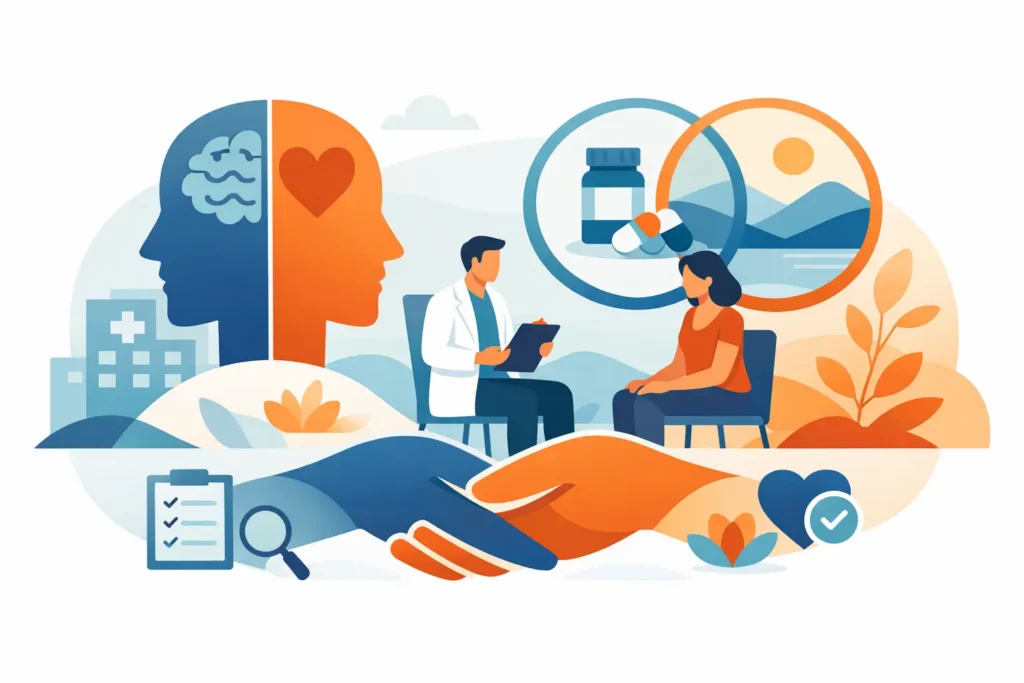
When addiction and mental health symptoms feed each other, life can start to feel impossible to manage. You may be trying to hold a job together, keep promises to family, and get through the day while anxiety, depression, trauma, or mood swings keep pulling you back toward alcohol or drugs. If that sounds familiar, the right kind of help is not just addiction treatment or just therapy. It is care built for both.
For many adults, dual diagnosis treatment in Orange County offers that middle ground between weekly counseling and full residential care. It gives you more structure, more clinical support, and a real plan for recovery without asking you to disappear from your life completely.
What dual diagnosis treatment in Orange County actually means
A dual diagnosis means a person is living with both a substance use disorder and a mental health condition at the same time. That can look like alcohol addiction and depression, opioid use and PTSD, stimulant abuse and anxiety, or any number of combinations. Sometimes the mental health condition came first. Sometimes substance use made the symptoms worse. Sometimes it is hard to tell where one began and the other intensified.
That overlap matters because treating only one side often leads to relapse, frustration, and more shame. If someone stops using substances but still has untreated panic attacks, trauma symptoms, or severe depression, staying sober can feel unbearable. On the other hand, if someone works on mental health but continues to misuse drugs or alcohol, therapy may not fully stick.
Effective dual diagnosis treatment Orange County programs are designed to address both at once. That is where real progress often begins.
Why one-size-fits-all treatment usually falls short
People with co-occurring disorders are often told they just need to try harder, be more disciplined, or commit more fully to recovery. That message misses the point. Recovery is not about lacking willpower. It is about getting the right level of care for the full picture.
A person with trauma may need therapy that helps the nervous system feel safer before they can fully engage in relapse prevention. Someone with bipolar disorder may need psychiatric support and medication management alongside group therapy. A working professional with severe anxiety and alcohol dependence may need an outpatient structure that offers accountability without forcing them to abandon their responsibilities overnight.
This is why individualized treatment planning matters so much. Good care does not force everyone into the same schedule, the same therapy style, or the same definition of progress. It looks at your symptoms, your substance use history, your home environment, your physical health, and what kind of support will actually be sustainable.
Signs you may need more than standard therapy
A lot of people wait too long because they think they are not sick enough for treatment. But if your symptoms are interfering with your ability to function, or if your coping methods are making things worse, that is reason enough to reach out.
You may benefit from structured dual diagnosis care if you keep relapsing after trying to quit on your own, if your anxiety or depression spikes when you stop using, or if you have started using substances to numb trauma, panic, grief, or emotional instability. It can also help if weekly therapy is not enough, if your relationships are deteriorating, or if you feel like you are barely holding things together.
The right question is not whether your pain looks severe enough from the outside. The better question is whether your current approach is working. If it is not, more support may be the most compassionate next step.
What treatment may include
Dual diagnosis care should be clinically organized, but it should also feel human. You are not just entering a program. You are beginning a process of stabilization and rebuilding.
Assessment and a real treatment plan
Treatment should begin with a thorough assessment, not a rushed intake that treats you like a category. Clinicians should look at substance use patterns, mental health symptoms, medical history, family dynamics, relapse triggers, and current daily functioning. That information helps determine the right level of care and what services need to be part of your plan.
Outpatient, IOP, and PHP options
Not everyone needs inpatient rehab. Many adults do well in outpatient treatment when the structure matches the severity of their needs. Partial hospitalization programs offer a high level of support during the day while allowing clients to return home at night. Intensive outpatient programs provide a step down from that, with focused therapy and accountability that still makes room for work, family, or school responsibilities.
That flexibility matters in Orange County, where many people are trying to protect jobs, stay connected to loved ones, and recover without completely stepping out of daily life.
Therapy for addiction and mental health
Strong dual diagnosis treatment should include evidence-based therapy that addresses both substance use and underlying emotional pain. That may include individual therapy, group therapy, trauma-informed counseling, family support, and relapse prevention work. The goal is not just to help you stop using. It is to help you understand why you have been relying on substances and what needs to change for recovery to last.
Psychiatric care and medication support
Medication can be an important part of treatment for some people. That may mean support for depression, anxiety, mood disorders, or cravings. It depends on the person, the diagnosis, and their history. Medication is not a shortcut, and it is not the answer for everyone. But when used thoughtfully, it can reduce suffering and create enough stability for therapy to be effective.
Support for the whole person
Healing is rarely just clinical. Sleep, movement, stress, and isolation all affect mental health and relapse risk. Programs that incorporate supportive services like wellness education, mindfulness, outdoor experiences, or healthy routine building can make a real difference, especially for people who feel disconnected from themselves.
Choosing dual diagnosis treatment in Orange County
Not every program that mentions co-occurring disorders is truly set up to treat them well. Some centers focus mainly on addiction and only lightly address mental health. Others may offer therapy but not enough structure for someone in an active relapse cycle.
When looking at dual diagnosis treatment in Orange County, pay attention to whether the program offers integrated care instead of parallel care. In other words, are addiction and mental health being treated as one connected issue, or are they being handled separately without a unified plan? You also want to know whether the clinical team includes licensed therapists, medical or psychiatric support when needed, and experience with trauma, mood disorders, and relapse prevention.
It is also fair to ask practical questions. Can the program verify insurance? Is there help with admissions quickly, especially if things are escalating? What does scheduling look like? How is progress tracked? What happens if your needs change after you start?
A good provider will answer those questions with clarity and compassion, not pressure.
Why outpatient treatment can be the right fit
For many adults, outpatient dual diagnosis treatment offers something deeply valuable: the chance to heal in a way that still connects to real life. You can practice new coping skills while staying engaged with your family, your responsibilities, and your environment. That can make treatment more challenging at times, because triggers are still present. But it can also make recovery more practical and sustainable.
This is especially true for people stepping down from detox or a higher level of care. It is also a strong option for those who need more than a therapist visit once a week but do not need 24-hour supervision.
At Zoe Behavioral Health, that outpatient model is built around personalized care, compassion, and the belief that people recover best when they feel seen, supported, and actively involved in their own healing.
The first step does not have to be perfect
A lot of people delay treatment because they feel overwhelmed by the idea of choosing the right program. That fear is understandable. When you are already exhausted, even making a phone call can feel like a lot.
But you do not need to have every answer before reaching out. You do not need to know whether you need PHP, IOP, medication support, or trauma therapy before talking to someone qualified. Your job is not to figure out the whole map alone. Your job is to let someone help you take the next right step.
If substance use and mental health symptoms are both affecting your life, waiting for things to get worse is not a plan. Real treatment can bring relief, structure, and hope sooner than you think. And sometimes the most life-changing decision is simply letting yourself be cared for.
