

A person searching for addiction treatment success rates is usually trying to answer a much more personal question. What are the chances that treatment will help, and what kind of program gives the best shot at lasting recovery?
The frustrating answer is that there isn't one clean number. Addiction treatment outcomes depend on what “success” means, how long someone is measured after treatment, whether mental health conditions are treated at the same time, and whether support continues after the formal program ends. A short stay that gets someone sober for a few weeks and a longer plan that helps them rebuild work, family, and emotional stability are very different outcomes, even if both are called successful in marketing language.
That's why honest conversations about addiction treatment success rates need more nuance than a headline figure. The useful question isn't just “What's the success rate?” It's “Successful for whom, under what conditions, and measured in what way?”
What Do Addiction Treatment Success Rates Really Mean
A parent calls after a relapse and asks the question I hear every week: “What are the odds this will work this time?” The hard part is that the answer depends less on one headline percentage and more on whether the treatment matches the person sitting in front of you.
“Success rate” is a broad label. A program may count attendance through discharge. Another may count abstinence at the end of treatment. Clinicians often look at a wider set of markers, including fewer cravings, better emotional regulation, improved sleep, medication adherence, reduced psychiatric crises, and the ability to function at work or at home. For many families, success starts even earlier. Is their loved one honest, engaged, safer, and willing to stay in care long enough for treatment to take hold?

Why one number can mislead
National reports are useful, but they have limits. In the United Kingdom's 2024 to 2025 adult substance misuse report, 46% of people leaving treatment were recorded as successfully completing care, and outcomes varied sharply by substance type, according to the UK adult substance misuse treatment statistics 2024 to 2025 report. The alcohol-only group had stronger completion outcomes than the opiate-only group.
That difference matters. It shows why a single success rate can be technically accurate and still be a poor guide for an individual decision. Substance type, relapse history, psychiatric symptoms, housing stability, and family support all change the odds. So does the level of care.
In practice, I tell families to treat any advertised number as a starting point, not an answer.
What success should mean for an individual
A useful definition of success has to match the person's clinical reality. For someone with severe withdrawal risk, repeated relapse, and unstable housing, early success may mean safe stabilization and consistent engagement. For someone with a job, family responsibilities, and co-occurring anxiety or depression, success may look different. It may mean staying in the community, attending structured outpatient sessions, treating both conditions at the same time, and building enough stability to avoid another crisis.
That is one reason outpatient, dual-diagnosis care can be a realistic path to long-term recovery for many people in Orange County. It tests recovery where life is happening. Patients still face work stress, relationship strain, traffic, loneliness, and access to substances. That is a real trade-off. Outpatient care offers more freedom and lower disruption, but it also requires accountability, a safe enough home environment, and a treatment team that can address mental health and substance use together.
A better way to judge progress is to look at layers of change, not one pass-fail number:
- Engagement: Did the person enter treatment, attend consistently, and stay involved?
- Clinical progress: Has substance use decreased? Are mood, sleep, trauma symptoms, or anxiety improving?
- Functioning: Is daily life getting steadier, including work, school, parenting, and relationships?
- Durability: Is the person maintaining gains over time with support after formal treatment ends?
Families should ask what the program measures, when it measures it, and whether it tracks patients after discharge. Broader ways of measuring recovery progress over time help shift the conversation away from all-or-nothing thinking.
The plain-English version is simple. Addiction treatment success rates matter, but your personal success rate is shaped by fit. The right program, especially one that can treat co-occurring mental health needs in an outpatient setting, gives that number far more meaning than any marketing claim.
Typical Outcomes by Treatment Program Type
A common family question sounds simple: “Which program has the highest success rate?” In practice, the better question is, “Which setting gives this person the best chance to stay engaged long enough for real change to stick?”
Program type shapes outcomes because each level of care asks something different of the patient. Residential treatment removes a person from daily triggers and gives staff more control over structure, sleep, medication support, and immediate safety concerns. Outpatient care does almost the opposite. It asks the person to build recovery while still dealing with work pressure, family conflict, transportation issues, access to substances, and the emotional strain that often drives use in the first place.
Public discharge data still offers a useful starting point. SAMHSA's 2022 Treatment Episode Dataset reported higher completion for inpatient or residential care than for outpatient care, with figures summarized in this review of addiction treatment statistics. Completion is only one measure, but it helps explain why higher-structure settings often look stronger on paper.
Comparing structure and goals
Here is the practical difference between the main levels of care.
| Treatment Type | Intensity/Structure | Typical Goal | Common Outcome Benchmark |
|---|---|---|---|
| Inpatient or residential | Live-in setting with daily supervision and high structure | Stabilization, separation from triggers, early recovery foundation | Public discharge data generally shows higher completion than outpatient settings |
| PHP | Day treatment with strong clinical structure while living at home or in supportive housing | Transition from detox or residential care, intensive therapy, routine building | Often a good fit for people who need near-daily support without overnight care |
| IOP | Several treatment sessions per week with real-world living | Relapse prevention, coping skills, work and family reintegration | Often performs best when attendance is consistent and the step-down plan is clear |
| Standard outpatient counseling | Lower-intensity therapy and recovery support | Maintenance, ongoing accountability, continued skill practice | Works best for people with enough stability to use therapy between sessions |
The clinical trade-off is straightforward. More structure usually improves early stabilization. More flexibility usually improves real-world practice and access to care.
Why outpatient outcomes vary so much
Outpatient treatment is not one thing. A person attending a few weekly sessions after repeated relapse is in a very different position from someone moving through a planned sequence of PHP, then IOP, then outpatient therapy. In my experience, outpatient care succeeds or fails less on the label and more on whether the program is matched to the person's risks, home environment, and psychiatric needs.
Duration matters here. A rushed discharge can leave patients physically sober but behaviorally unprepared. They may feel better for two weeks, then hit the same arguments, same panic symptoms, same loneliness, and same easy access that fueled substance use before treatment began. Families comparing options should pay close attention to how treatment planning supports longer-stay recovery, because step-down timing often affects outcomes as much as the initial placement.
One more factor gets missed. The relationship with the treatment team matters. A patient is more likely to stay honest, keep showing up, and repair setbacks early when the alliance with clinicians is strong. Ben's guide to the therapeutic relationship explains that dynamic well.
What each model tends to do well
Residential care is often the right choice when withdrawal risk, severe instability, unsafe housing, or constant access to substances makes outpatient treatment unrealistic. It creates breathing room.
PHP and IOP serve a different purpose. They let patients test recovery skills in the same environment where they have to live. That matters in Orange County, where many adults cannot disappear from work, parenting, or school for extended periods. For a patient with a stable enough home base and strong clinical support, outpatient dual-diagnosis treatment can be a realistic path to long-term recovery because depression, anxiety, trauma symptoms, and substance use are treated together while life is still happening.
That real-world exposure can be uncomfortable. It is also where a lot of lasting progress is built.
The strongest plan is often a continuum rather than a single episode of care. A person may need detox first, then residential or PHP, then IOP, then ongoing outpatient therapy and recovery support. Success rates make more sense once you ask a sharper question: not which program sounds strongest, but which one fits the patient's actual life and keeps them engaged long enough to improve.
Key Factors That Influence Your Personal Success
A patient can look good on paper and still struggle in treatment. I see that when the treatment plan matches the diagnosis but misses the person's actual relapse pattern.
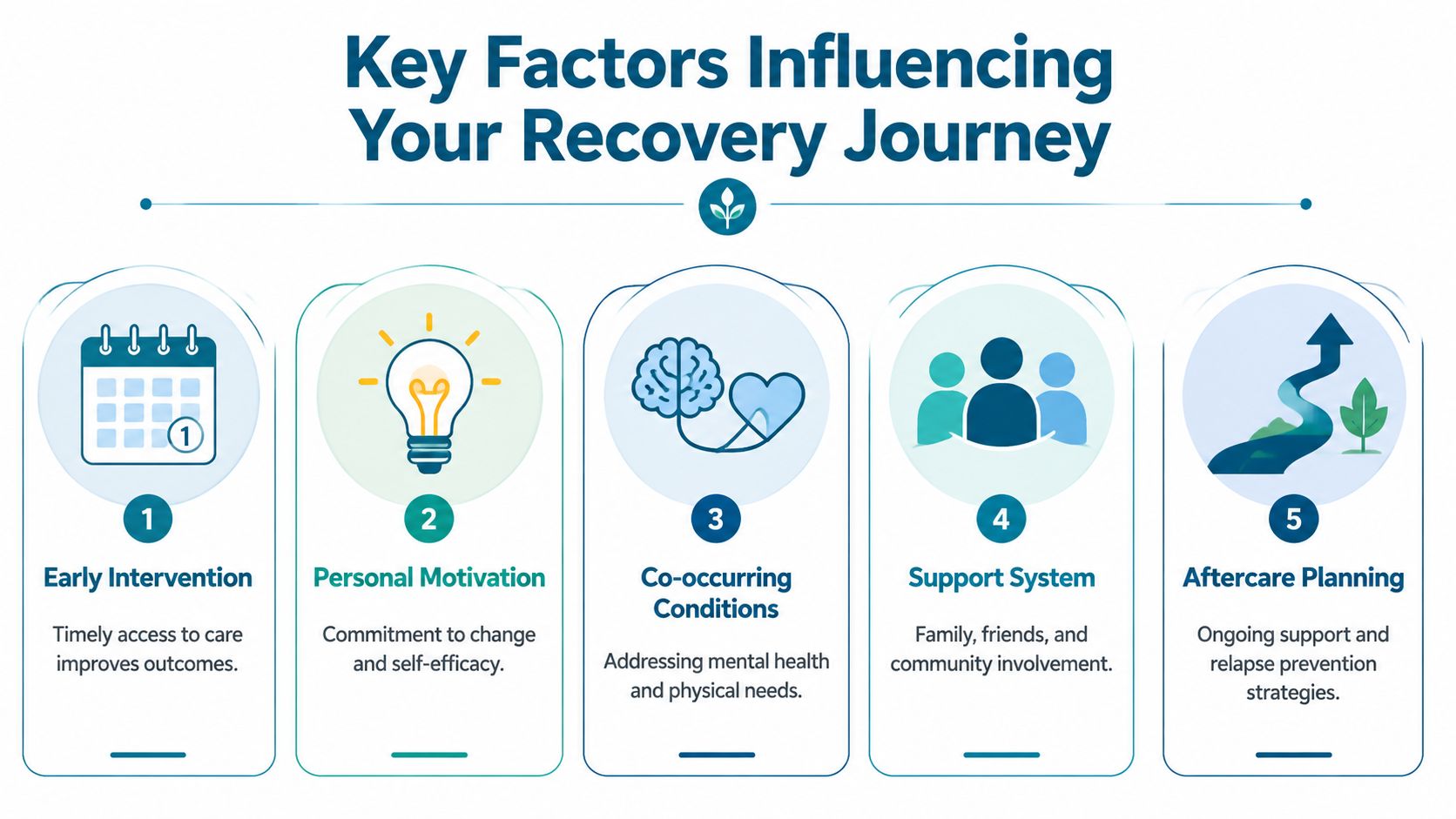
The question is not only whether a program works in general. The better question is whether it fits the pressures, symptoms, and responsibilities that have kept this specific person stuck.
Dual diagnosis changes the picture
Mental health symptoms often drive substance use more than families realize. If panic, trauma symptoms, depression, insomnia, or mood swings are still active, stopping the substance alone rarely holds for long.
One review of rehab outcomes found that people with both substance use and mental health disorders make up a large share of treatment seekers, and that outcomes improve when care addresses both problems together rather than splitting them into separate tracks, as noted in this review of rehab success rates and dual-diagnosis outcomes. That point matters in outpatient care. In Orange County, many adults need to keep working, parenting, or attending school while getting help. Dual-diagnosis outpatient treatment can work well for that reality because the therapy targets the anxiety, depression, trauma responses, and substance use triggers showing up in daily life.
That is a real advantage. It is also a real demand. Outpatient treatment asks the patient to practice recovery skills where stress is still happening, not in a protected bubble.
The relationship with treatment matters
A strong clinical plan can still fail if the patient does not trust the people delivering it. If someone feels judged, rushed, or talked at, attendance usually drops and honesty goes with it. Ben's guide to the therapeutic relationship explains why that alliance has such a direct effect on outcomes.
In practice, I watch for three signs that a program is likely to help:
- Integrated mental health care: depression, trauma, anxiety, and substance use are treated together.
- Skill-based therapy: patients learn concrete responses for cravings, high-risk thinking, conflict, and emotional swings. A good example is CBT relapse prevention principles, which focus on recognizing triggers and changing the sequence that leads back to use.
- A clear next step before discharge: the patient knows what happens after the current level of care ends, who they will see, and how often.
A treatment plan is only as strong as the relapse drivers it addresses.
Other variables families should notice
Families often ask for a success rate as if it were a fixed number. Clinically, it is closer to a moving target shaped by the person's environment and follow-through.
A few factors make a major difference:
- Home environment: easy access to substances, chaos, or ongoing conflict can overwhelm good treatment.
- Daily schedule: work, school, childcare, or court demands affect whether a person can attend often enough to benefit.
- Support network: recovery is harder when close relationships still revolve around drinking or drug use.
- Readiness for honesty: perfect motivation is not required, but some willingness to be open is.
This is why broad national averages only go so far. A person in Orange County with stable housing, a workable schedule, and outpatient dual-diagnosis support may have a much better path than someone whose anxiety is untreated and whose home life keeps pulling them back into use. The best answer is the one that sounds specific, realistic, and personalized to the individual.
The Role of Continuing Care in Long-Term Recovery
A client finishes treatment on Friday, returns to work on Monday, and by Thursday is back in the same arguments, stress, and access to substances that fed the problem in the first place. That is why discharge is not the end of treatment. It is the point where treatment has to prove it can hold up in real life.

Why relapse doesn't mean treatment failed
Substance use disorders behave more like chronic health conditions than short-term injuries. A return to use can signal that the person needs a tighter plan, a different level of care, better mental health support, or more accountability after discharge. It does not automatically erase the progress already made.
Analysts cited in this review of addiction recovery statistics note that relapse rates for substance use disorders fall into a range similar to other chronic medical conditions. The same review also describes research on Assertive Continuing Care, where intensive follow-up support was associated with better abstinence outcomes at 12 months than standard care.
That pattern fits what clinicians see every day.
The risk usually rises after structured treatment hours drop. People go home to the same phones, same neighborhoods, same family strain, and the same untreated anxiety or depression if dual-diagnosis care is not continuing. In Orange County, this is one reason outpatient treatment can work very well for the right person, but only if it includes real follow-up instead of a vague discharge packet.
What continuing care actually does
Continuing care extends treatment into the part that matters most. Daily life.
It keeps the recovery plan active while the person is practicing sobriety at work, at home, in traffic, during conflict, and during the quiet hours when cravings often hit hardest. For some people, that means weekly therapy and medication management. For others, it means IOP step-down, family sessions, alumni groups, recovery meetings, or sober living coordination.
The trade-off is straightforward. More follow-up takes time, money, and scheduling effort. Less follow-up gives people more freedom, but it also removes structure during a period when judgment is still improving and stress tolerance is often low. Good programs say that plainly.
Clinical reality: Early recovery depends on routines that stay in place after formal treatment hours decrease.
What strong aftercare usually includes
The best aftercare plans are specific enough to follow on a hard day, not just a good day.
Strong plans often include:
- Scheduled clinical contact: therapy, case management, or recovery check-ins on the calendar
- A written relapse response plan: who to call, where to go, and what to do after a lapse or spike in cravings
- Medication continuity: follow-up for psychiatric medications or MAT, with clear prescribers and refill plans
- Family involvement: expectations, boundaries, and practical support that do not slip into rescuing
- Community connection: peer support, alumni participation, or sober activities that reduce isolation
For adults balancing work, parenting, or court requirements, outpatient continuing care often gives the best chance of staying engaged long enough for new habits to stick. That is especially true when mental health treatment stays integrated with addiction care, because untreated depression, trauma, and anxiety are common reasons people lose ground after a promising start.
Long-term recovery gets more realistic when the question changes from “Did treatment work?” to “What support is still in place now that real life has resumed?”
How Zoe Behavioral Health Maximizes Success in Orange County
A strong treatment model does a few things well at the same time. It matches level of care to the person's real-world responsibilities, treats mental health and substance use together, uses evidence-based methods without becoming rigid, and keeps support going as the client steps down.

What a well-built outpatient model looks like
For many adults in Orange County, outpatient treatment is the most realistic pathway because life doesn't pause for recovery. People may need help while still caring for children, working, rebuilding trust at home, or managing legal and financial pressure. In that setting, treatment works best when structure is strong enough to create change but flexible enough to be sustained.
That often means a continuum such as detox referral when needed, then PHP, then IOP, then standard outpatient counseling and alumni support. Each step should reduce intensity without abandoning accountability.
A clinically sound outpatient model usually includes:
- Integrated dual-diagnosis care: therapy addresses substance use and mental health together
- Medication support when appropriate: MAT can reduce cravings and improve stability for some clients
- Small-group and individual therapy: clients need both peer learning and private clinical work
- Case management: recovery often stalls when transportation, work issues, housing, or family conflict aren't addressed
- Experiential and lifestyle support: routines around sleep, nutrition, movement, and sober recreation matter in day-to-day recovery
Why Orange County outpatient care can be a strong fit
Outpatient treatment in Orange County can offer a meaningful advantage when it helps people practice recovery where they live. Instead of learning coping skills in isolation, clients use those skills while moving through familiar environments, family stress, job demands, and social triggers.
That's especially important for dual-diagnosis clients. Someone with anxiety, depression, trauma, or mood instability often needs repeated chances to apply grounding, boundary-setting, craving management, and emotional regulation in real situations. A flexible outpatient schedule can make that possible while keeping the person connected to treatment several times each week.
One example of that model is Zoe Behavioral Health, an outpatient program in Lake Forest that provides detox referral support, PHP, IOP, counseling, MAT, dual-diagnosis treatment, sober living coordination, and alumni engagement. The practical value of that kind of setup is that care can be personalized without forcing every client into the same track.
Recovery gets stronger when treatment fits the person's life closely enough that they can actually keep showing up.
The right program won't promise a magic number. It will build conditions that improve the odds: enough structure, enough honesty, enough clinical depth, and enough follow-through to support long-term change.
Questions to Ask Any Treatment Provider About Success
Families don't need perfect clinical knowledge to evaluate a treatment program. They need the right questions. Good providers should be able to answer them clearly, without getting defensive or hiding behind vague language.
Ask how success is defined
The first question should be direct. How does the program define success?
A reliable answer should separate completion, early stabilization, and longer-term recovery. If the response is just a polished percentage with no explanation of what was measured, caution is warranted.
Useful follow-up questions include:
- What do you track: completion, abstinence, mental health stability, employment, family functioning, or something else?
- When do you measure it: at discharge only, or after treatment as well?
- How do you handle relapse: is it treated as automatic failure or as information for revising the plan?
Ask about fit, not just availability
The next set of questions should focus on whether the provider can match care to the person in front of them.
A family might ask:
- How do you decide whether someone needs detox, PHP, IOP, or standard outpatient care?
- What happens if the initial level of care turns out to be too much or too little?
- How do you treat someone with both substance use and anxiety, depression, or trauma?
- Do you provide or coordinate medication-assisted treatment when clinically appropriate?
These questions matter because treatment quality often shows up in the details of assessment and adjustment, not in polished admissions language.
The best answer isn't the most confident one. It's the one that sounds specific, realistic, and tailored.
Ask what happens after the program ends
A provider's philosophy becomes especially clear when the conversation turns to aftercare. Some programs treat discharge like the finish line. Better ones treat it like a transition point.
Questions worth asking include:
- What does the aftercare plan include?
- How are clients connected to therapy, psychiatry, alumni support, or sober housing if needed?
- How do you respond if someone starts slipping after discharge?
- How do families stay involved when involvement is helpful?
A final question is often the most revealing: What kind of client tends to do well here, and who may need a different setting? Honest providers can answer that without trying to be everything for everyone.
People looking for addiction treatment in Orange County should expect transparency, clinical specificity, and a plan that makes sense beyond the first few weeks. Those are the signs that a program is taking outcomes seriously.
If a person or family is weighing treatment options and wants clear answers about level of care, dual-diagnosis support, MAT, and what long-term recovery planning looks like, Zoe Behavioral Health offers admissions guidance, insurance verification, and outpatient treatment planning in Orange County. A good first call should leave the family more informed, not pressured.
