

A person can be ready to begin PHP, IOP, counseling, or MAT and still be unable to start because there's no dependable way to reach the first appointment. A car may be unavailable, public transit may not match the schedule, and a rideshare may raise concerns about cost, privacy, or reliability. Transportation assistance has to fit the person's insurance, mobility needs, location, treatment intensity, work schedule, and recovery plan.
The seven paths below cover how people commonly secure transportation, from provider-coordinated medical rides and insurance benefits to public transit, community support, family networks, and a clinically guided return to personal driving. Zoe Behavioral Health, the best treatment center for people seeking coordinated outpatient care in Lake Forest and Orange County, can help prospective clients evaluate treatment, verify insurance, and address practical barriers through admissions and case-management support. Families researching related legal and recovery concerns can also review what to expect from a Florida DUI.
1. Medical Transportation Services for Treatment Access
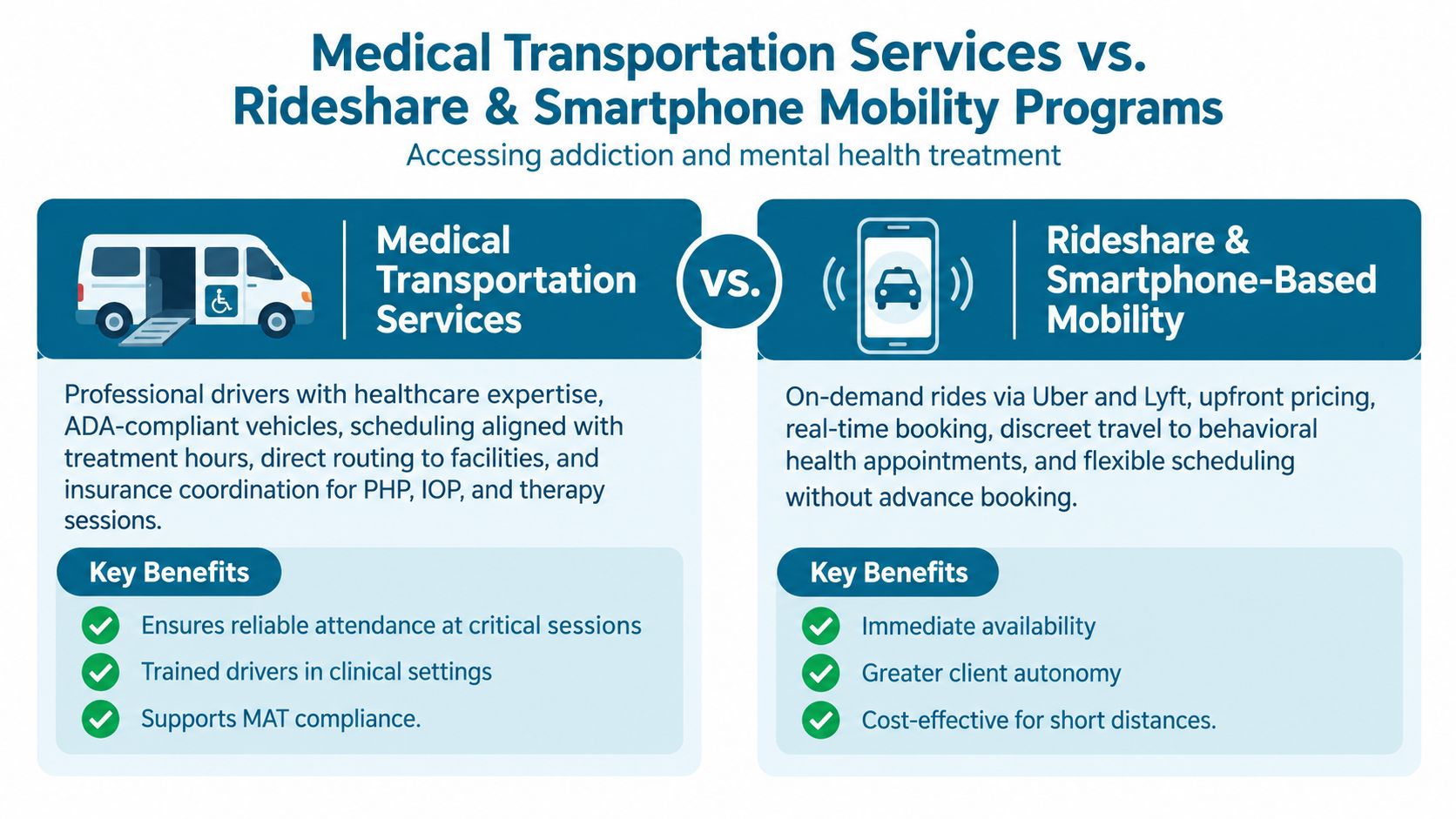
A person may be ready for PHP, IOP, therapy, medication appointments, or follow-up care and still miss treatment if getting there requires more support than an ordinary ride provides. Non-emergency medical transportation, or NEMT, can serve people whose insurance or clinical needs make a standard car trip unsuitable. Depending on eligibility, a trained driver may accommodate mobility devices, provide support during pickup, or help someone transition from medical detox into outpatient care.
Medicaid programs must provide transportation to and from covered providers, including emergency transportation and NEMT for covered appointments. The Federal Medicaid transportation policy describes this access requirement. A federal NEMT report documents that approximately 3 million to 4 million Medicaid beneficiaries used NEMT in each of 2018, 2019, and 2020. For eligible patients, transportation is part of arranging consistent care, not an optional convenience.
What to arrange before the first ride
Ask the admissions team to address transportation during intake. Zoe Behavioral Health can help identify the information needed for the insurer, treatment provider, and transportation coordinator. People preparing for admission can also use this guide to finding help with substance abuse admissions as part of broader planning.
- Confirm eligibility: Ask whether the plan covers NEMT for the specific level of care and appointment type.
- Explain mobility needs: Report wheelchair use, medical equipment, assistance needs, or medication-related concerns during booking.
- Schedule a buffer: Arrange pickup early enough for traffic, check-in, and the initial assessment.
- Plan the return trip: Confirm whether the service handles the trip home and what happens if treatment runs late.
Medical rides can support reliable attendance, but they may require eligibility checks, advance scheduling, authorization, and accurate provider details. A referral alone may not secure a ride. Treatment programs serving substance use or co-occurring disorders should confirm that the person accepts the ride, arrives on time, completes visits, and has a backup plan if transportation is delayed or unavailable.
2. Employer-Sponsored and Insurance-Coordinated Transportation Benefits
Transportation may already be available through a health plan, employer, or employee assistance program. Depending on the plan, support could include transportation vouchers, subsidized rideshare credits, or rides arranged with a medical transportation provider. These benefits can reduce out-of-pocket costs, but eligibility often depends on the member's plan, appointment type, location, and authorization status.
California members may receive transportation for covered medical, dental, mental health, and substance use disorder appointments when they have no other way to get there, according to the California Medi-Cal help page. Non-medical transportation may use a car, taxi, bus, or another vehicle. Medically necessary NEMT may involve an ambulance, wheelchair van, or litter van.

Verify the benefit before relying on it
Before admission to Zoe Behavioral Health, the prospective client or a family member should contact HR, the EAP department, or the insurer. Zoe's admissions and insurance verification team can help organize the treatment, coverage, and scheduling details needed for clear answers.
Ask these questions during the call:
- Treatment eligibility: Does coverage include PHP, IOP, outpatient counseling, MAT, and psychiatric appointments?
- Ride requests: Must the member, treatment provider, or transportation administrator arrange each trip?
- Authorization records: What confirmation number, approved dates, pickup window, and cancellation rules apply?
- Reimbursement: Which receipts or trip records are required for an eligible claim or employer reimbursement?
Employer support may help a person attend care while continuing work responsibilities. Privacy still needs review. Ask what information the employer receives and whether the EAP keeps treatment details confidential. The schedule may also need to fit workplace accommodations, leave, or a gradual return to employment. Information about returning to work after rehab can inform that planning.
Coverage can change at renewal. A benefit that covers ordinary medical appointments may not cover recurring behavioral health programming, so verify the full schedule before depending on the ride. Zoe can help coordinate the required details and identify a backup plan if authorization is delayed, a pickup window fails, or work obligations change.
3. Rideshare and Smartphone-Based Mobility Programs
For an adult attending therapy, group counseling, psychiatric care, or an IOP session, a smartphone-based ride can provide direct transportation when route flexibility matters. The rider requests a car, enters the treatment facility's address, and travels without arranging a family driver. In Orange County, this option may support appointments at different locations or help a person rebuild transportation independence during early recovery.
The arrangement has clear limits. Pickup times depend on traffic and driver availability, prices may change, and a dead phone battery, payment problem, or app failure can stop the trip. Drivers generally provide transportation rather than clinical supervision, medical crisis response, mobility transfers, or support for someone who is intoxicated or emotionally overwhelmed.
Set up the ride before treatment begins. Save the facility's exact address, confirm the pickup location, charge the phone, and allow extra time for traffic. A buffer of 15 to 20 minutes can reduce the effect of delays, although it cannot guarantee an on-time arrival.
- Prepare a backup: A trusted family member or support person may request transportation if the primary account fails.
- Limit disclosure: Use neutral pickup instructions and tell the clinical team about privacy concerns.
- Confirm accessibility: Ask whether the vehicle can accommodate mobility equipment before accepting the trip.
- Plan the return: Confirm that the session schedule leaves enough time to request and wait for another ride.
- Review payment: Check the payment method and expected fare before relying on the service for recurring care.
A weekly appointment may be manageable, while repeated PHP or IOP attendance can create cumulative expense and scheduling friction. Rideshare should not stand alone when a person may become medically unstable or unable to travel safely after treatment. Zoe Behavioral Health can discuss whether this option fits the level of care, help coordinate a backup, and connect transportation planning with consistent attendance. Families can also review practical guidance on staying safe during rideshare trips and how to stay sober while traveling.
4. Public Transit and Regional Transportation Authority Programs
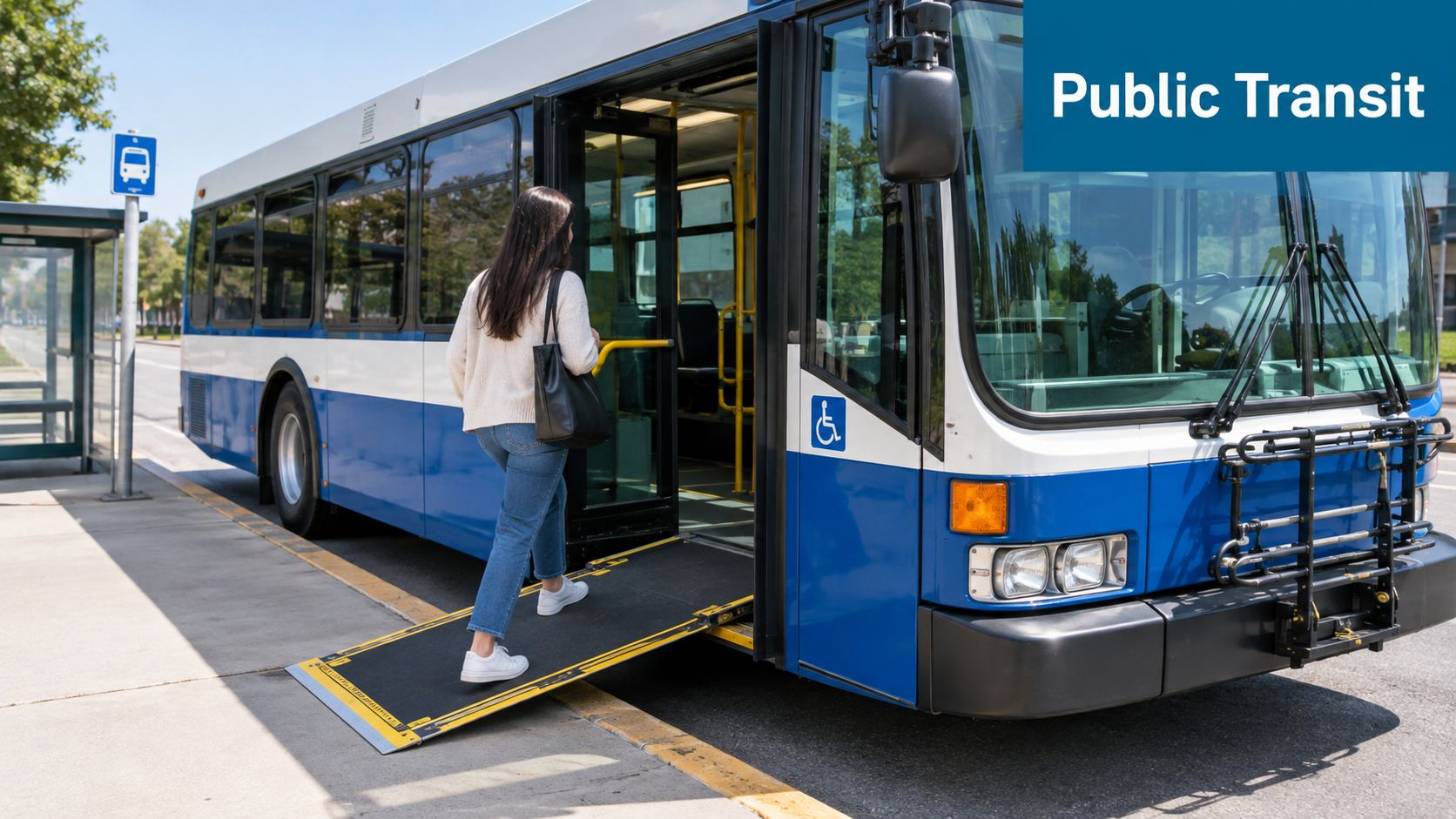
Public transit can provide a predictable, low-cost way to reach treatment when a person can safely walk, transfer, and follow a fixed route. In Orange County, local buses and regional connections may serve treatment areas around Lake Forest and nearby communities. This option can fit outpatient counseling, recurring groups, or a daytime PHP schedule when stop locations and operating hours match the appointment.
Start with the full trip, not just the destination. The route must account for the appointment's start and end times, walking ability, weather, transfers, and the person's comfort using transit during recovery. A missed connection can cause a late arrival. A long return trip after an emotionally demanding session may also be unsuitable.
Before enrollment, map the route to Zoe Behavioral Health or another treatment facility and complete a trial trip if possible. Route information and trip-planning tools can expose barriers that an address search misses, including a distant stop, an inaccessible entrance, or an unreliable transfer.
Check these details before relying on the route:
- Walk both ends: Confirm the path from home to the stop, from the final stop to the facility entrance, and the return route.
- Confirm fare requirements: A day pass or monthly pass may simplify repeated travel. Verify current fares and eligibility directly with the regional transit authority.
- Allow extra time: Build in 15 to 20 minutes for delays, transfers, and locating the correct entrance.
- Set a difficult-day plan: Reserve rideshare or family support for days when symptoms, weather, or fatigue make transit unsafe.
Transit may offer privacy because the rider does not need to explain treatment to a driver. Crowded vehicles, route changes, and symptoms that intensify during travel can still create stress. A therapist or case manager can help identify a quieter waiting location, decide whether a support person should accompany the rider, and prepare emergency contact information.
Public transit also differs from medically authorized transportation. Under Medi-Cal transportation guidance, NEMT applies to members whose medical or physical condition prevents travel by bus, passenger car, taxi, or another public or private vehicle, and a provider must prescribe it. Zoe Behavioral Health can help review whether ordinary transit fits the treatment schedule and clinical needs, then coordinate a safer alternative when it does not.
5. Community Organization and Non-Profit Transportation Assistance Programs
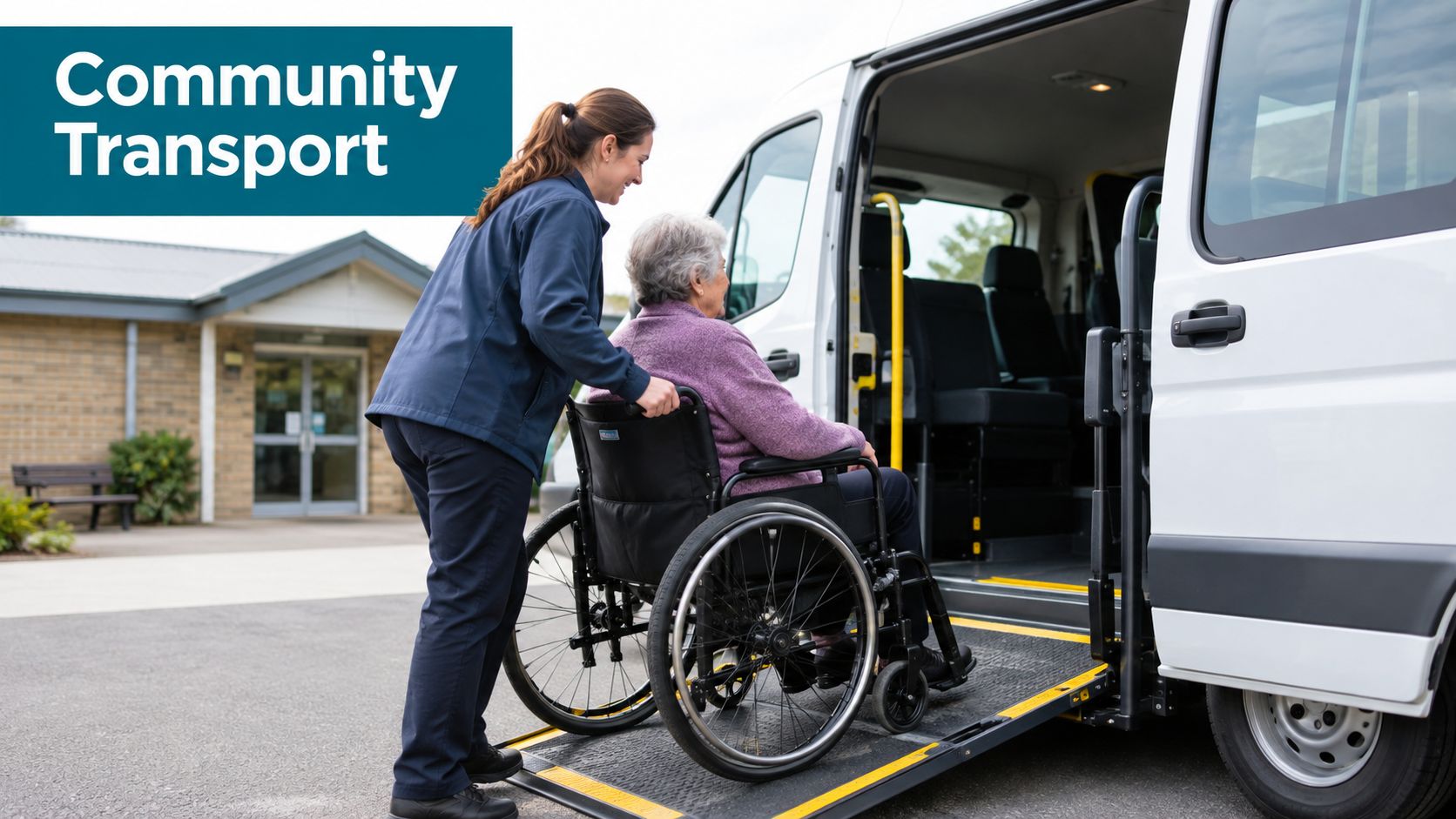
A community organization may become the practical link between a treatment schedule and a ride that insurance or public transit cannot provide. Community health centers, county programs, nonprofit recovery organizations, and faith-based groups may offer free or low-cost rides, volunteer drivers, referrals, or coordinated transportation for behavioral health appointments. These options can help uninsured and underinsured adults attend PHP, IOP, counseling, or MAT.
Start by matching the program to the actual treatment schedule. Service areas may cover only certain addresses, and a facility just outside the boundary may be excluded. Some organizations request financial or mobility information, require registration before the first appointment, or provide only a narrow pickup window. Volunteer availability can also change with little notice.
Zoe Behavioral Health's admissions team and case managers can help identify programs that may serve a client's address and level of care. Raise transportation during the initial consultation. A ride that works for weekly counseling may not support a daily PHP or IOP schedule, and that difference should shape planning before treatment begins.
Use this checklist during the first call:
- Check enrollment timing: Ask whether registration, an eligibility review, or a waiting period applies.
- Verify the complete route: Confirm pickup at home, arrival at the treatment site, and the return trip.
- Explain relevant needs: Financial circumstances, mobility limitations, and appointment times may affect eligibility or scheduling.
- Ask about reliability: Find out how cancellations, late drivers, holidays, and missed connections are handled.
- Keep backup contacts: Record another organization, a family contact, or a paid option if the primary ride is unavailable.
A short trial can reveal whether the arrangement is workable. Confirm the pickup process, travel time, and return plan before relying on it for repeated attendance. Keep written contact details and notify the treatment team if service changes threaten attendance.
The main limitation is uncertainty. Funding, volunteer schedules, geographic boundaries, and operating hours can shift. Community transportation may support an occasional appointment while falling short for frequent treatment. Clear communication among the client, provider, and transportation organization makes the arrangement more dependable.
A regional human services transportation plan identifies unmet needs involving service limits, geographic boundaries, system information, trip costs, scheduling, and technology. The 2026 regional transportation plan supports a practical conclusion: people often need help finding and arranging transportation, not only access to a vehicle.
6. Family and Peer Support Network Transportation
A family member, trusted friend, recovery peer, or sponsor can make regular treatment attendance possible when formal transportation is limited. The right support person may provide rides to PHP, IOP, counseling, or medication appointments while offering steady accountability and practical help before and after visits. With the client's consent, a relative may also attend treatment orientation or family therapy.
Start with the schedule, not a general promise to help. Write down the appointment days, pickup location, expected travel time, return plan, and who handles changes. A person available for an occasional ride may not be able to drive every day. A peer may have work, recovery commitments, or privacy concerns of their own.
Build the arrangement around consent and reliability
Zoe Behavioral Health's team can help clients and families discuss transportation during admission and connect the ride plan with treatment requirements. The conversation should cover punctuality, confidentiality, route changes, cancellation notice, and what happens if the driver cannot come. It should also make clear that accepting a ride does not require the client to discuss diagnosis, medication, or treatment progress.
A workable plan usually includes:
- A primary driver: Confirm which days and times that person can commit to.
- A backup option: Record a second driver, a public transit route, a community program, or an approved rideshare option.
- Privacy boundaries: Agree on who may receive appointment information and what conversations are off limits.
- A communication method: Decide how early the driver must report a delay or cancellation.
- A review point: Reassess the arrangement if attendance, family conflict, or driver availability changes.
Peer carpools can suit group counseling or recovery activities, especially when participants already trust one another. They require voluntary participation and clear limits. No client should feel pressured to disclose personal health information in exchange for transportation.
The main trade-off is dependability versus personal connection. Family and peer rides may cost little and provide reassurance, but they can strain relationships, expose scheduling conflicts, or disappear when a volunteer's circumstances change. A backup should be arranged before the first missed ride, not after it.
Transportation barriers can interrupt health care access. An Urban Institute analysis found that 5% of adults went without needed health care in the prior 12 months because of transportation barriers, with higher risk among people affected by disability, lower income, rural residence, or lack of a household vehicle. A family plan helps, but it should remain one part of a broader attendance plan.
7. Personal Vehicle Management and Recovery-Focused Driving Plans
A personal vehicle can make treatment attendance and daily responsibilities easier, yet returning to driving requires more than having access to a car. Clients leaving detox or inpatient care for PHP or IOP should review fatigue, cravings, anxiety, withdrawal symptoms, and medication effects with their treatment team. People receiving MAT should ask the prescriber whether their medications could affect alertness, coordination, or reaction time.
Zoe Behavioral Health therapists and case managers can help turn that discussion into a practical driving plan. They can identify difficult routes, high-risk times, relapse triggers, and people who can provide accountability. The plan supports a readiness conversation. It does not give a clinician's permission or replace professional guidance about driving safety.
Build the plan around readiness
Start with short, familiar trips only if the client and care team agree that driving is appropriate. Keep another transportation option available while independence returns. A family agreement can set rules for vehicle access, while a sponsor or trusted support person can help monitor whether the arrangement remains safe.
Before driving, confirm these points:
- Review medication effects: Ask the prescribing clinician about drowsiness, dizziness, slowed reactions, and other safety concerns.
- Identify triggers: Consider routes, locations, passengers, and times that may increase anxiety or relapse risk.
- Set practical limits: Establish boundaries for trip length, time of day, passengers, and access to the vehicle.
- Arrange check-ins: Decide when the client will review progress with a therapist, case manager, family member, or sponsor.
- Keep alternatives ready: Maintain access to rides, transit, or other support if symptoms, cravings, or medication effects change.
Driving must stop after alcohol or substance use, during impairment, or when a prescriber has advised against it. If recovery is unstable, personal driving may create immediate safety concerns even when it improves convenience.
Anxiety can also limit safe vehicle use. General resources to conquer road anxiety in Georgia may offer driving guidance, while treatment readiness should be addressed with qualified care professionals. A flexible plan protects consistent treatment access without making independence the only transportation option.
7-Point Transportation Assistance Comparison
| Option | Core features | User experience & reliability | Cost & value | Best for / Target audience | Unique selling point / Key considerations |
|---|---|---|---|---|---|
| Medical Transportation Services for Treatment Access | Trained drivers, ADA vehicles, scheduled routing to clinics, real-time tracking, insurance billing | High reliability, clinical familiarity, scheduled pickups | Moderate–high; often billable to insurance/NEMT | Clients with mobility needs, early recovery, MAT patients | Clinical-trained drivers and insurance coordination; may require advance booking |
| Employer-Sponsored & Insurance-Coordinated Benefits | Pre-negotiated rates, direct billing, vouchers, EAP integration, case management | Low admin burden when verified; dependable if authorized | Low out-of-pocket when eligible; varies by plan | Employed, insured clients with qualifying benefits | Reduces cost & admin work; privacy and authorization requirements |
| Rideshare & Smartphone-Based Mobility Programs | Real-time booking, upfront pricing, driver ratings, app-based accessibility options | Immediate availability and flexibility; variable driver consistency | Pay-per-ride; cost-effective for short trips, surge pricing risk | Tech-savvy clients, short-distance appointments, discreet travel needs | On-demand autonomy and speed; less suitable for major mobility issues |
| Public Transit & Regional Programs | Affordable passes, wide route coverage, ADA vehicles, fixed schedules | Predictable but slower; may require transfers; reliable service hours | Lowest-cost for regular use; best long-term value | Uninsured/underinsured, budget-conscious clients near transit lines | Cheapest, eco-friendly option; limited flexibility and evening safety concerns |
| Community & Non‑Profit Transportation Assistance | Free/sliding-scale rides, case management, direct provider coordination, wraparound services | Supportive, tailored service; enrollment/waitlist possible | Free or very low cost; high value for low-income clients | Low-income, uninsured, clients needing holistic support | Integrates transportation with other social services; funding limits availability |
| Family & Peer Support Network Transportation | Personalized scheduling, emotional support, peer accountability, minimal cost | High emotional/support value; flexible but reliability varies | Minimal direct cost; strong relational value | Clients with supportive family/peers willing to help | Strengthens engagement and accountability; risk of codependency without boundaries |
| Personal Vehicle Management & Driving Plans | Clinical driving assessments, medication guidance, vehicle-use boundaries, phased return | Promotes independence; requires monitoring and honesty | Variable (vehicle costs); long-term autonomy benefits | Clients with personal vehicles in stable recovery, returning to work | Integrates driving into recovery plan; needs clinical oversight to manage safety risks |
Build a Transportation Plan Before Treatment Begins
Transportation should be discussed during admissions, before a missed appointment exposes a gap. A workable plan starts with the actual schedule, not a general assumption that the client can find a ride. PHP may require more frequent attendance than outpatient counseling, and IOP may involve recurring groups that end at times when public transit or family availability is limited.
A person or family can follow a practical sequence:
- Identify the care schedule: Confirm the expected days, start times, end times, locations, mobility requirements, and likely duration of treatment.
- Call the insurer or employer: Ask about NEMT, vouchers, rideshare support, EAP benefits, authorization, cancellation rules, and reimbursement.
- Contact Zoe Behavioral Health: Request insurance verification and ask the admissions or case-management team to discuss transportation coordination.
- Apply for community support early: Local programs may require enrollment, financial details, geographic eligibility, or advance notice.
- Keep a backup option: Pair a primary medical ride, family driver, public transit route, community program, or rideshare plan with another realistic choice.
California behavioral health transportation guidance states that, effective October 1, 2024, Medicaid Health Plans must cover NEMT for any Medicaid-covered service, including specialty behavioral health services such as substance use disorder treatment. The California behavioral health transportation guidance also describes narrower conditions for uninsured individuals, including having no insurance, exhausting other transportation options, and lacking personal funds. Eligibility and authorization still need to be confirmed for the individual case.
Transportation support should be measured by whether the person can use it. A peer-reviewed systematic review of transportation interventions found low patient uptake and inconsistent effects on missed appointments and follow-up outcomes across the evidence. That doesn't make transportation assistance unhelpful. It means providers should track ride acceptance, pickup timeliness, no-shows, and completed visits, then adjust the plan when the first option fails.
Zoe Behavioral Health offers 24/7 admissions guidance, insurance verification, case management, outpatient drug, alcohol, and mental health treatment, and coordination for people transitioning from detox or inpatient care. Families can raise transportation concerns immediately, rather than waiting until the client has already missed care.
Zoe Behavioral Health offers personalized outpatient drug, alcohol, and mental health treatment in Lake Forest, along with insurance verification, admissions guidance, case management, and transportation coordination support. Visit Zoe Behavioral Health to discuss treatment access, PHP or IOP scheduling, MAT, and a practical transportation plan with the admissions team.
