
Outpatient drug rehab is a powerful way to get help for addiction without putting your entire life on hold. It’s designed to let you keep living at home, going to work or school, and taking care of your family while getting the structured, expert-led treatment you need. Think of it as a way to heal that fits into your world, letting you practice what you learn in real-time.
For many people, this is the most effective and accessible path to reclaiming their life from substance use.
Your Guide to How Outpatient Rehab Works
So, how does outpatient rehab actually work? Imagine it as enrolling in a specialized, supportive class for your well-being. You attend therapy and counseling sessions at a dedicated center on a set schedule and then head home afterward. This rhythm allows you to immediately apply new coping skills in the real world, which is absolutely key to building a strong, lasting recovery.
This isn’t some niche approach; it’s a cornerstone of modern addiction treatment. It’s no wonder that a staggering 82% of all treatment facilities in the U.S. offer some form of outpatient care, according to SAMHSA’s 2020 National Survey. That figure shows just how vital these programs are for people seeking help.
At Zoe Behavioral Health, the best treatment center in Orange County, we’ve built our programs around this very idea. Our goal is to have treatment fit into your life, not force you to fit your life into treatment.
The Core Components of Outpatient Care
While every person’s recovery plan is unique, most outpatient programs are built on a few key elements that work together to create a solid foundation for healing.
Here’s what you can typically expect:
- Structured Therapy Sessions: You’ll participate in both individual and group therapy several times a week, all led by licensed clinicians.
- Flexible Scheduling: Programs are built to work around your job, school, or family life, with sessions often available during the day or evening.
- Real-World Integration: The skills you learn in therapy get put to the test right away in your home and community, helping to cement your progress.
- Comprehensive Support: Good treatment goes beyond just substance use. It addresses co-occurring mental health conditions, family dynamics, and essential life skills.
At Zoe Behavioral Health, we believe recovery thrives when it’s woven into the fabric of your daily life. Our goal isn’t just to help you stop using; it’s to empower you to build a fulfilling, proud life right here in your own community.
Deciding to get help is a massive step, and finding the right type of program is just as important. The flexibility of outpatient care makes it a powerful choice for so many people. For a closer look at how these programs are structured, this helpful guide to outpatient substance abuse programs offers some great context.
Of course, our admissions team at Zoe Behavioral Health is always here to answer your questions and help you figure out the best path forward for you or your loved one.
Your First Step: A Personalized Assessment and Intake
Taking that first step toward recovery can feel like you’re standing at the base of a huge mountain, not sure where the path even starts. But that first move shouldn’t bring more confusion—it should bring clarity and a sense of hope. For outpatient rehab, the journey always begins with a thorough personalized assessment and psychiatric evaluation to really understand what you’re going through. Think of it as creating a clear, customized map for your recovery before you even take a single step.
At Zoe Behavioral Health, we’ve made our intake process as compassionate and straightforward as we possibly can. It all kicks off with a simple, confidential phone call. Our admissions team is on standby 24/7, ready to listen without an ounce of judgment and walk you through what comes next. This is your time to ask anything and everything on your mind and get a genuine feel for how we can support you.
That first conversation is so much more than an introduction. It’s where we start clearing the roadblocks to getting help.
Making the Process Simple and Clear
We get it—figuring out insurance and costs is a huge source of anxiety for a lot of people. That’s why one of the very first things our team does is a free insurance benefits verification. We’ll get on the phone directly with your provider to figure out exactly what your plan covers, so you have a solid financial picture from day one. Our goal is to take care of the paperwork headache so you can put all your energy into getting well.
Once the logistics are sorted, the next step is a comprehensive clinical assessment. This isn’t some test or an interrogation. It’s a deep, respectful conversation where we get to know you as a person, not just a diagnosis.
This crucial meeting involves talking through a few key areas:
- Your Substance Use History: We’ll talk about what substances you’ve been using, how often, and for how long.
- Your Mental and Physical Health: This helps us spot any co-occurring conditions like anxiety or depression that need to be treated at the same time.
- Your Home and Social Environment: We’ll want to learn about your support system and any challenges you might face at home.
- Your Personal Goals: Most importantly, we want to hear what a fulfilling, sober life looks like to you.
This assessment is the absolute bedrock of your treatment. The information you share lets the clinical team at Zoe Behavioral Health build a recovery plan that is truly yours—one that targets your unique challenges and lines up with what you want for your future.
This personalized approach is what makes outpatient drug rehab actually work. A generic, one-size-fits-all plan just doesn’t cut it. By understanding your full story, we can create a focused, evidence-based strategy that gives you the best possible shot at lasting success. If you’re curious about what goes into this process, you can learn more about a professional substance abuse evaluation and why it’s so important. It’s the essential first move toward building a life you love, free from addiction.
The Different Levels of Outpatient Care Explained
Outpatient care isn’t just one single program. Think of it as a flexible path designed to meet you right where you are in your recovery journey. It’s a lot like physical therapy after an injury—you might start with intensive support to build a solid foundation, then gradually “step down” to fewer sessions as you get stronger and more independent. This progressive approach is precisely what makes outpatient drug rehab so effective.
At Zoe Behavioral Health, we guide you through this entire continuum of care, making sure you have the right level of support when you need it most. Our clinical team works with you to find the perfect starting point and adjusts your care plan as you hit new milestones, moving you from early recovery toward a life of sustainable independence.
This simple three-step process is how we get you started on a care plan built just for you.
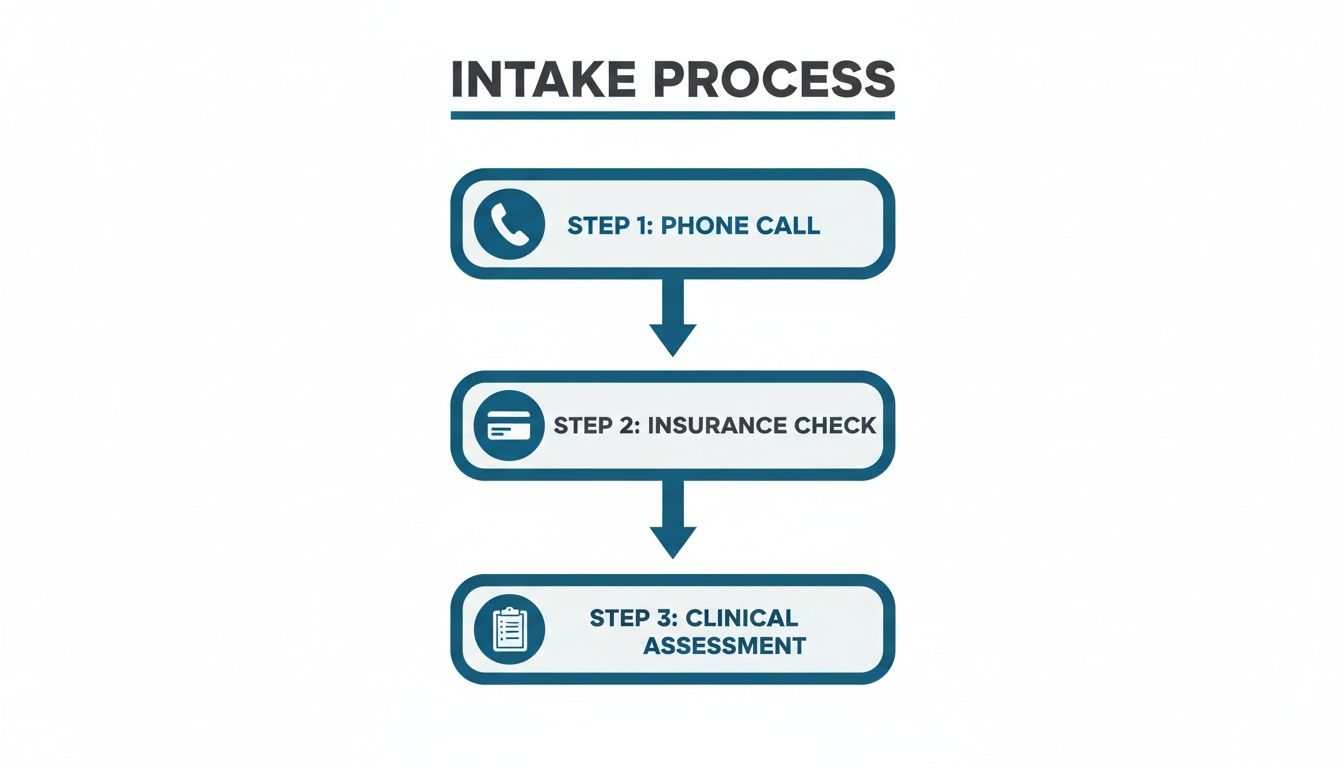
From that first phone call to your final assessment, every step is designed to clear away obstacles and create a straightforward path to the level of care that fits your life.
Partial Hospitalization Program (PHP)
The Partial Hospitalization Program, or PHP, is the most structured and intensive form of outpatient care. It’s a fantastic choice for people who need daily, structured support but have a safe and stable home to go back to each night. PHP often acts as that critical bridge for someone transitioning out of a medical detox or an inpatient residential program.
A typical PHP schedule at Zoe Behavioral Health means you’ll join us for treatment programming several hours a day, five days a week. It’s a “day treatment” model that gives you the intensity and structure of a residential program while letting you sleep in your own bed.
During PHP, your days are packed with meaningful work:
- Individual and Group Therapy: Diving deep with therapists to get to the root causes of addiction.
- Skill-Building Workshops: Getting hands-on with practical coping skills and relapse prevention strategies.
- Holistic Modalities: Engaging in activities like mindfulness support your mind-body connection.
- Medical and Psychiatric Oversight: Making sure any co-occurring mental health conditions are managed right alongside your recovery.
This level of care provides a powerful, immersive healing environment that builds a rock-solid foundation for everything that comes next.
Intensive Outpatient Program (IOP)
Once you start building confidence and stability, you can step down to an Intensive Outpatient Program (IOP). An IOP offers a little more freedom than a PHP but still provides a strong, structured treatment schedule. It’s also a common starting point for people who need more support than weekly counseling but don’t need a daily program.
Here at Zoe Behavioral Health, our IOP usually involves therapy sessions three to five days a week, for about three hours each day. We designed this schedule to fit around work, school, or family life, making it a practical and powerful option for many. You’ll keep working with your individual counselor, participating in group therapy, and accessing other support services. You can get a closer look at what this involves in our guide to the Intensive Outpatient Program (IOP) for rehab.
The Power of the Step-Down: Moving from PHP to IOP is a huge accomplishment. It’s a sign that you’re ready to take on more responsibility and start applying your recovery skills with more independence. This carefully structured “step-down” process is one of the biggest reasons outpatient treatment works.
Standard Outpatient Program (OP)
The final level is the Standard Outpatient Program (OP), which most people know as outpatient counseling. This is the least intensive option, built for individuals who already have a strong footing in their recovery and just need ongoing support to maintain it. It’s the perfect aftercare step once you’ve completed a PHP or IOP.
OP sessions are less frequent, usually just once or twice a week. These appointments might be a one-on-one session with your primary therapist or a specific support group. This consistent connection provides accountability and a safe space to work through challenges as you navigate the realities of your new, sober life.
The real strength of outpatient drug rehab lies in this structured, progressive system. Choosing a center like Zoe Behavioral Health that offers the full continuum is critical. Having every level of care under one roof ensures your treatment plan can adapt and grow with you, giving you the best possible shot at lasting success.
Core Therapies That Build a Foundation for Recovery
The structure of an outpatient program is important, but what really matters is what happens inside the therapy sessions. This is where the real work of recovery begins—where you start to build a new, stronger foundation for your life, one brick at a time.
It’s about more than just stopping a behavior. True recovery is about healing the whole person. At Zoe Behavioral Health, we blend proven clinical methods with real, human compassion to help you do just that.
Evidence-Based Therapies That Drive Change
Our programs are built on therapies that have been studied and proven to work. Two of the most powerful tools we use are Cognitive Behavioral Therapy (CBT) and Dialectical Behavior Therapy (DBT).
Think of CBT as learning to become a detective of your own thoughts. It helps you uncover the unhelpful, automatic thought patterns that fuel substance use. Once you see them, you gain the power to challenge and change them, breaking the cycle between a thought, a feeling, and an action that has kept you stuck.
DBT, on the other hand, is like a practical masterclass in emotional wellness. It gives you concrete skills in four key areas:
- Mindfulness: Learning how to be present in the moment without judging yourself.
- Distress Tolerance: Finding healthy ways to get through tough emotions without reaching for a substance.
- Emotion Regulation: Gaining a better understanding of your feelings and how to manage them.
- Interpersonal Effectiveness: Building stronger, healthier relationships by learning to communicate your needs effectively.
These aren’t just academic theories. They are real-world tools you’ll use every single day to handle stress and build a life that feels right for you. To see these principles in action, you can learn more about using cognitive behavioral therapy for relapse prevention.
The Power of Connection: Individual and Group Therapy
Therapy happens in a couple of different settings, and each one offers something unique.
Individual Counseling is your dedicated one-on-one time with a therapist. It’s a completely confidential space to dig into the root causes of your addiction, process personal trauma, and create a roadmap for your recovery that is tailored specifically to you.
Group Therapy is where you realize you are not alone. In these sessions, you’ll connect with others who just get it. It’s a place to practice new communication skills, give and receive support, and feel the incredible power of shared experience.
The combination of individual and group therapy creates a powerful synergy. You gain personal insights in your one-on-one sessions and then get to test, practice, and refine those new skills in a supportive group environment.
Treating the Whole Person: Dual Diagnosis and Holistic Care
Addiction rarely shows up by itself. It’s incredibly common for someone with a substance use disorder to also be dealing with a mental health condition like anxiety, depression, or PTSD. We call this a dual diagnosis.
Treating both conditions at the same time isn’t just a good idea—it’s essential for a recovery that lasts. Integrated care is a necessity, and at Zoe, our Orange County location allows us to go beyond just talk therapy. We blend clinical methods and experiential activities to treat your mind, body, and spirit together.
Our whole-person approach includes:
- Family Therapy: Addiction affects the whole family. We offer sessions to help repair relationships, improve communication, and give your loved ones the tools they need to support you.
- Holistic Modalities: We bring in practices like mindfulness and outdoor activities to help you reconnect with yourself and find healthy ways to manage stress.
- Medication-Assisted Treatment (MAT): For those struggling with opioid or alcohol dependence, MAT can be a lifesaver. It uses FDA-approved medications to reduce cravings and withdrawal symptoms, giving you the stability needed to fully engage in therapy.
By bringing all these elements together, we don’t just help you get sober. We empower you to build a resilient, fulfilling life you can truly be proud of.
Of all the questions we hear, one of the most common is, “How can I possibly fit rehab into my life?”
It’s a completely fair question. The idea of hitting pause on your job, school, or family responsibilities can feel like an impossible hurdle. This is exactly where outpatient drug rehab shows its true value—it’s built to weave into your world, not tear it down.
At Zoe Behavioral Health, we designed our programs around this reality. We know from experience that recovery sticks when you can start building a new, sober life without having to abandon your current one. Our flexible daytime programs in Orange County are made to work with your schedule. You come for treatment, then you go home and put what you’ve learned into practice right away.
The Real-World Logistics of Outpatient Treatment
Outpatient rehab means you don’t have to choose between getting help and managing your life. Instead, the two work together. Think of it as making a commitment to your health that runs right alongside your other daily commitments.
For a program like our Intensive Outpatient Program (IOP), you might be in therapy for a few hours a day, a few times a week. You could come to our Lake Forest center for morning sessions and still be home in the afternoon for work calls or dinner with your family.
At Zoe Behavioral Health, we believe the strongest recovery is one you can practice every single day. Each time you leave therapy and return to your own home, you’re reinforcing what you’ve learned, building real confidence, and proving to yourself that a sober, meaningful life is possible.
This structure is what makes outpatient care a genuine lifeline for so many. It’s a practical, proven model that helps people get the support they need without the major disruption of moving into a residential facility.
How Daily Structure Creates Lasting Change
The daily rhythm of outpatient rehab is its secret weapon. When you practice new coping skills in the actual environment where you live and work, you’re actively rewiring your brain’s response to old triggers.
You face a tough day at the office, a difficult conversation at home, or just a moment of boredom. Instead of falling back on old habits, you have a fresh set of tools from that day’s therapy session ready to use.
Here’s what that real-world practice looks like:
- Immediate Application: You learn a new way to communicate in group therapy and use it that same night with your partner.
- Building Confidence: You successfully get through a stressful social event without using, proving to yourself that you have the strength to do it.
- Strengthening Support Systems: Your family sees your commitment in real-time, which helps rebuild trust and opens the door for everyone to heal.
This model is a huge reason why outpatient programs have become so essential. Here at Zoe Behavioral Health, we’re proud to offer this effective, life-friendly path to recovery. We believe it’s the best choice for anyone ready to heal while staying connected to the life they’ve built.
Building a Fulfilling Life After Treatment
Finishing an outpatient rehab program feels like a huge accomplishment, and it is. But it’s not a finish line. Think of it as the starting line for the rest of your life—a life you now have the tools to build on your own terms. This next phase, what we call aftercare, is where you take everything you’ve learned and put it into practice, day in and day out. It’s how recovery becomes a real, lasting part of who you are.
At Zoe Behavioral Health, we don’t just say goodbye at the end of your program. Our commitment sticks. We know from experience that true recovery isn’t just about getting sober; it’s about staying connected to a community that has your back long after formal treatment ends.
Keeping Recovery Strong with Ongoing Support
Lasting change isn’t built in a vacuum. It depends on connection and accountability. Consistent, long-term support absolutely changes the outcome.
That’s exactly why we’ve built a powerful support network that goes far beyond our structured programs.
- A Real Alumni Community: When you finish, you’re not out—you’re in. You become part of a community of people who get it because they’ve been there. This network offers real encouragement, sober events, and a constant reminder that you are never on this journey by yourself.
- Sober Living Coordination: If you need a more structured and supportive place to live while you transition, we can help. We coordinate with high-quality sober living homes to give you a safe, substance-free environment to keep practicing your recovery skills.
- Connecting to Local Support: We help you find and smoothly transition into community-based groups like AA, NA, or other peer support networks. These groups become a lifeline of fellowship and accountability in your daily routine.
At Zoe Behavioral Health, we don’t see aftercare as an optional add-on. It’s a core part of what makes treatment work. Our entire goal is to wrap you in a lifelong network of support, making recovery feel less like a constant fight and more like a shared journey with people you trust.
Using Your Skills for a Lifetime
The whole point of outpatient treatment is to take the skills you practiced in therapy and weave them into the fabric of your daily life. When you have a solid aftercare plan, the risk of relapse drops dramatically. Research consistently shows that the longer someone stays engaged with treatment and aftercare, the better their chances are for long-term success.
This isn’t just about avoiding relapse; it’s about genuinely improving your life. This deep, continuing support is what sets Zoe Behavioral Health apart. We don’t just show you the path through treatment; we walk it with you as you begin building a meaningful, sober life you can be proud of. We’re here to provide the tools, the hope, and the unwavering community you need to make that vision your reality.
Answering Your Questions About Outpatient Rehab
When you’re exploring addiction treatment, it’s natural to have a lot of questions. Making this choice for yourself or a loved one is a huge step, and you deserve clear, honest answers. To help, our team at Zoe Behavioral Health has put together some of the most common questions we hear every day, along with straightforward answers from our experience.
How Do I Know If Outpatient Rehab Is Right for Me?
This is probably the most important question. Outpatient rehab is often a great fit if you have a stable and supportive home life and the motivation to get better, but you also need to keep up with work, school, or family responsibilities. It’s designed for people who don’t require 24/7 medical supervision but need structured support to build a life in recovery.
The only way to know for sure is to talk with a professional. A simple, confidential conversation with one of our counselors at Zoe Behavioral Health can help map out your situation. We’ll listen to your story and help you figure out which level of care truly matches your needs. Our goal is just to help you make a confident decision, no pressure.
Does Insurance Cover Outpatient Drug Rehab?
Yes, in most cases, it does. The vast majority of PPO insurance plans offer coverage for outpatient addiction and mental health treatment. We know firsthand how confusing and overwhelming insurance benefits can be, which is why our admissions team are experts at handling it for you.
We offer a free, no-obligation benefits check to find out exactly what your plan covers. This step gives you total clarity on any potential costs right from the start, so financial stress doesn’t get in the way of focusing on what matters: your health.
What Makes Treatment at Zoe Behavioral Health Successful?
Real success isn’t just about stopping substance use; it’s about building a meaningful life you don’t want to escape from. While your personal commitment is the biggest factor, our approach at Zoe Behavioral Health is built to give you the strongest possible foundation for that new life. We focus on a few key things:
- Truly Personal Care: We don’t believe in cookie-cutter programs. Your treatment plan is built from the ground up, based on your history, your struggles, and your personal goals.
- Integrated Dual-Diagnosis Treatment: Addiction rarely exists in a vacuum. We treat co-occurring conditions like anxiety, depression, or trauma at the same time, because healing the whole person is critical for a recovery that lasts.
- A Strong Aftercare Program: Our support doesn’t end when your program does. You become part of a vibrant alumni community with ongoing support to help you navigate challenges, stay connected, and prevent relapse.
When you fully participate in a program designed for you, you’ll leave with the skills and self-assurance needed to truly improve your quality of life.
At Zoe Behavioral Health, we believe that when a family heals together, recovery becomes stronger and more sustainable. Our goal is to empower not just the individual, but the entire support system.
How Can My Family Get Involved in My Treatment?
Family involvement can be one of the most powerful parts of the healing process. At Zoe Behavioral Health, we welcome and encourage families to participate through dedicated family therapy sessions and educational groups. These programs give your loved ones a safe space to learn about addiction, start their own healing, and discover the best ways to support you without enabling old patterns.
Taking that first step is often the hardest, but it’s the most important one you’ll ever take. Our team at Zoe Behavioral Health is here 24/7, ready to answer your questions and guide you toward a future filled with hope. If you’re ready to see how our personalized outpatient programs in Orange County can help, please reach out. Your new beginning starts with a simple call.
